

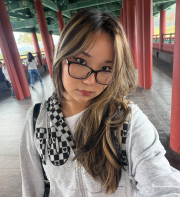
My first month at POSTECH can be measured in countless GS25 visits, dozens of awkwardly pronounced Korean phrases, and hours spent keeping up with the locals’ study rhythm. Leaving home at 18 and moving to a completely new country to study as part of POSTECH’s first international undergraduate cohort was absolutely bold of me. Yet in this short amount of time, I have experienced so many things that have changed how I view my surroundings and even myself.
I still remember how, at 80% humidity and 34-degree heat, with my entire life packed into two suitcases, I was climbing the hill to reach the Residential College (RC) building, as I made the biggest mistake of ordering the taxi to the wrong address twice. Just as it was about to get overwhelming, the first people to greet me with smiles and a welcoming atmosphere were my global advisors (GAs). Honestly, the system of having global, residence, and faculty advisors and the effort put into assisting freshmen to this day gives me a sense of security and comfort amid unfamiliarity. My biggest concern of getting an Alien Registration Card turned out to be quick and painless thanks to the helpful orientation-week sessions. Another lasting impression was the living conditions in the RC. As soon as I stepped into my room, I knew that the place with such comfort provided could easily feel like home.
Even though I was already familiar with how academically competitive and rigorous POSTECH is, the international-friendly Freshman Research Participation Class and research-heavy approach in every department immediately create an environment where any ideas are welcomed. Personally, it is especially exciting to have the possibility of gaining hands-on experience in a laboratory in the very Department of Chemical Engineering I wrote my POSTECH personal statement essay about. Another unexpected thing I am grateful for is the fact that the small size of the classes is exceptionally convenient for ensuring a very interactive and close way of learning.
Despite the above, some challenges made this journey not as smooth as my idealized image of an international student had led me to expect. No matter how much I prepared myself psychologically, there were times when signs or instructions were only provided in Korean, or when there was an invisible barrier to becoming a part of a new community when you have a completely different background. The fear of not fully being able to adapt grew stronger. I have also noticed that some Korean students seem hesitant to approach international students, especially due to the language barrier. But English is not necessarily our first language either, and most of us are just as nervous about starting conversations. Still, we really want to become closer to the local community. Lastly, although not my personal struggle, I have witnessed how my Muslim international friends significantly struggled to find halal food, as available options are still very limited.
I did not come with the expectation that everything would be perfect, and even just seeing small efforts towards an international-friendly environment is a very touching experience. Some signs that were once in Korean have now been replaced with those with English translations. Every day, I make more Korean friends through planned events, make sure to sharpen my Korean speaking skills, and even adopt local habits, such as learning how to sort the garbage. I still find some signs confusing, hesitate before using Korean phrases, and do not precisely know what exact research topic excites me the most, but POSTECH already feels less foreign and more like home.
