

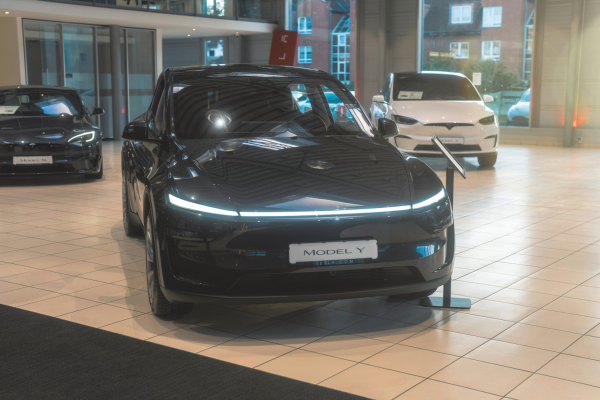
Korea has a highly competitive automobile market where domestic and foreign manufacturers compete for consumers. Among them, domestic brands such as Hyundai and Kia have been the most popular choices for Korean customers because of their affordable prices and accessible service networks. Therefore, the title of Korea’s best-selling car has traditionally belonged to domestic carmakers. However, in May, Tesla Model Y became the first foreign vehicle in Korean car market history to rank as the country’s best-selling car of the month. It ranked second in June, then reclaimed the top spot in July and August. Compared with other foreign automakers, Tesla stands out even more, accounting for almost one-third of imported cars in the Korean market.
Several factors explain Tesla’s recent success. One major factor is the advanced driver-assistance capability of Tesla vehicles. Tesla’s FSD technology, which stands for Full Self-Driving, provides an unprecedented level of driving assistance, enabling the vehicle to drive almost entirely on its own under the driver’s supervision. This could redefine the car’s role from a means of transportation to a comfortable space for relaxation during travel. Although only 20% of Tesla vehicles in Korea are capable of FSD, many consumers still buy Tesla, expecting its active software updates to enable their vehicles to adopt FSD.
Furthermore, price has played a major role in Tesla’s recent rise. Traditionally, foreign cars in Korea were mostly classified in the premium or luxury segment, with high quality but also high prices, which made them less accessible to ordinary consumers. Tesla, however, introduced a Shanghai-made Model Y at a more affordable price of 49.99 million KRW, which also kept the vehicle eligible for government EV subsidies. Even though the “made in China” tag is not very favorable for Korean consumers, its relatively low price for its level of performance and convenience has attracted many consumers and contributed to strong sales.
At the same time, rising vehicle prices among domestic automakers encouraged Korean consumers to consider Tesla when the price gap is relatively small. Hyundai’s new Avante, for example, saw its starting price rise by roughly 3-4 million KRW compared to the previous generation, prompting criticism over the higher price of what has been an affordable entry-level car. In addition, Hyundai and Kia’s electric vehicles, such as Ioniq 5 and EV6, are priced in a similar range to the Tesla Model 3 and Model Y, with some trims even exceeding their prices. As the price gap between Tesla and comparable domestic EVs narrows, Korean consumers are leaning toward Tesla as a viable alternative to domestic brands.
Tesla’s recent rise has further intensified competition in the Korean car market. It may threaten Korean automakers, warning them to invest more in self-driving and driving-assistance technologies so they don't fall behind in the competition, not only in Korea but worldwide. On the other hand, the competition can also benefit Korean customers, as it pushes companies to offer better quality and promotions to avoid losing customers.
If Tesla’s current gallop continues until the end of the year, the Model Y may be the best-selling car of the year, for the first time as an imported vehicle. Will Tesla make new history, or will Korean automakers secure their title on home ground? This makes their competition more intriguing and worth watching through the end of the year.
