As AI-driven autonomous laboratories transform the landscape of modern experimentation,
The Postech Times asked Professor Sekyu CHOI (LIFE) and Prof. Jeongwook LEE (CHEM) to share their insights on the future of scientific research.
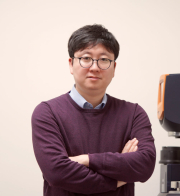
What the Robot Arm Cannot See: A Human Side of Autonomous Laboratories
A student asked after watching a robot laboratory video: “Professor, won't researchers eventually stop needing to run experiments by hand?” The technology is advancing. In my experience, even an arm running thousands of reactions a day halts at the most interesting discoveries and what happens next still belongs to humans.
At POSTECH’s Department of Life Sciences, I study the differentiation of adult skin and hair follicle stem cells. Cells cannot form hypotheses, design experiments, or judge what counts as a meaningful result. We must pose the questions before cells will answer.
My team recently reported that skin stem cells communicate with surrounding cells before injury and quietly prepare for regeneration. The discovery began with a small moment: a graduate student placed an immunostained sample under the microscope only to find that some cells lit up while others did not. For days, he scribbled in front of that image, “Why only some? Why do only some re-program?” That little “why” became our first clue to an intercellular signaling circuit captured for the first time in wound healing.
I call the know-how that books and data cannot replace “research intuition.” AI can propose the most likely answer, but cues like “this reagent concentration looks unusual,” “the cell populations are responding differently today,” stem cells’ temperature sensitivity, or two vials from the same reagent lot behaving differently—only intuition by hand and eye reads them. Against AI’s datasets, we are losing the habit of asking, “What is unexpected here?”
I do not mean to disparage autonomous labs. Automation works well when a condition must run tens of thousands of times for a baseline or to separate variables. But deciding which result becomes the next hypothesis, which aging or wound healing model deserves attention, and which question carries scientific urgency—these are places where human judgment is crucial.
To POSTECH students I would say: become skilled with AI tools, but do not let them take the place of the hours you personally manage data and fail. Nights paging through dozens of notebook pages for one faulty data point, mornings when a puzzling line sends you back to swap reagents—these accumulate into the capacity to ask “meaningful questions.” Research that chases only efficiency forgets its answers; research that lives through failure defines new problems. Technology narrows hypotheses quickly, but the courage to throw one in still belongs to humans.
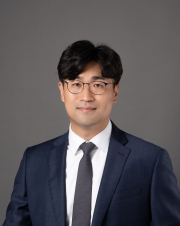
Failure to the Robot, Questions to the Human: Researcher in the AI Era?
A few days ago, our lab biosynthesized hundreds of protein variants and tested their activity. A process that would have taken several weeks if performed by hand was completed in just a day or two. Automated experiments are already part of industrial infrastructure.
First, there is one clear thing: bioengineering has much more to be solved. Therefore, the role of human researchers remains greater than ever. The automated laboratory we are currently developing is a prime example of this. The most time-consuming part of the research was not the dispensing of reagents but deciding on which signals to detect. That decision emerged from other strategies our lab had failed at, as well as anecdotes of failure that hadn’t been published, and ideas taken from entirely different fields.
What the autonomous laboratory does best is repeat many experiments and failures within a hypothesis. However, the area that remains most vulnerable is the judgment of which direction to formulate a hypothesis. Looking forward, won’t AI be able to ask good questions on its own? AI excels at computationally recombining existing knowledge to produce plausible options. This is distinct from a leap forward stemming from a new understanding of causal structures. If Artificial General Intelligence becomes a reality, the very premise of this article could be overturned. However, for now, AI can make judgments only within the boundaries of the information already provided.
I believe it is possible for AI to overcome this limitation. However, the possibility depends on the extent to which human researchers document their thought processes. “AI will be able to do this someday” does not diminish the role of human researchers; rather, it makes it even clearer why recording the judgments humans make is so important. And this is why humans and autonomous laboratories can create synergy.
A researcher’s time and effort are finite. Humans can focus their time on sorting through failures to identify meaningful signals and determine the next step: a structure in which AI handles many failures, while humans handle the interpretation and the generation of the next hypotheses. This is the vision I have.
However, the ability to discern failure does not develop on its own. Interestingly, recent studies show that senior researchers who have built up their intuition through years of experience with failure benefit most from AI tools.
I want to say to students who dream of becoming researchers that this is the time to cultivate that discernment through failure. The habit of asking yourself questions that automation cannot answer, such as why you chose a particular condition or whether a result is truly a meaningful signal, will help you discern what is important when faced with the flood of results generated by AI.
Humans have to ask the following questions. I hope you will ask yourself, in your own academic journey and long-term research plans, where to invest your limited time and intuition. Finding the answer to that question will be the essential competency needed in the AI era.