

The Postech Times sought the opinions of Professor Victoria ELLIOTT (HSS) and
Professor ROE Jung-hye (Seoul National University) on the operations of the newly established POSTECH Diversity Council.
The Problem with “Diversity”
Diversity: Not a passive collection of differences, but an active ongoing practice of connection

Some words describe the world. Others shape how we understand it. ‘Diversity’ is one of those words—and its meaning may be more complex than we assume.
In everyday use, diversity is often reduced to difference: different backgrounds, identities, abilities, and ways of participating in everyday campus life. But “difference” here is often a strangely passive idea, and can imply separation rather than connection. When we hear “diversity,” we may be imagining a collection of distinct parts, set alongside one another, rather than something actively shared.
This distinction matters in a university setting. A campus can be diverse in composition while remaining divided in experience. Students and staff may study, work, and live alongside one another, but still feel separated by limited opportunities to participate together. Group discussions, lab work, or informal spaces can remain uneven or difficult to navigate, even within a shared environment. When interaction is minimal or uneven, diversity risks becoming a matter of proximity rather than connection.
What would it mean to think of diversity differently? Not as the presence of difference, but as the interaction of differences. Not as a condition we have achieved, but as a practice we continue to build—through communication, shared participation, and mutual recognition. What if differences were something to be acknowledged not as barriers, but as starting points for dialogue?
Language matters here. The words we use do not simply reflect reality; they organise it. Consider the difference between a catalogue and a dialogue. A catalogue lists items, arranging them side by side without requiring interaction. A dialogue, by contrast, brings people into relation. It is dynamic, responsive, and shaped by exchange. Both involve multiplicity, but only one produces understanding. Too often, diversity is treated like a catalogue—something to be counted, displayed, or acknowledged—rather than like a dialogue, which is something to be practiced.
Initiatives—such as those planned by POSTECH’s newly formed Diversity Council—that invite reflection and exchange, however small, are one way of beginning this process.
In Scotland, there is a saying: “we’re a’ fae (from) somewhere.” It reminds us that difference is not only a matter of origin, but of lived experience—and something we share. Perhaps the question is not whether our campus is diverse, but whether we are in dialogue with one another.
For the sustainable success of POSTECH Diversity Council
For the sustainable success of the POSTECH Diversity Council, consistent leadership and dedicated resources are needed
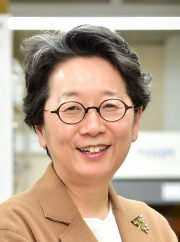
I sincerely congratulate the launch of the POSTECH Diversity Council. POSTECH is a research-focused university recruiting a small number of elite students to provide Korea’s highest level of excellence education—quite different in nature from Seoul National University (SNU), which launched its diversity council 10 years ago as a comprehensive university spanning humanities, science, engineering, and medicine, with a student body nearly ten times larger. Nonetheless, a comparison with SNU’s College of Natural Sciences and College of Engineering is meaningful.
POSTECH’s undergraduate enrollment is comparable to SNU’s College of Natural Sciences (CNS) (1565), with about 50 more full-time faculty (235 in SNU), over twice the graduate students, and roughly three times the researchers (328 in SNU). Compared to SNU’s College of Engineering (CoE), POSTECH has around 50 fewer full-time faculty, a similar graduate student count, and more than twice the researchers. The female undergraduate ratio mirrors CNS (20%); female graduate students mirror CoE (24%), lower than that of CNS (35%), and female faculty mirrors CoE (7.5%), lower than that of CNS (12.8%). POSTECH stands higher than SNU in female undergraduate admissions, but attracting female graduate students remains insufficient and securing female faculty requires greater effort.
The insular laboratory culture in science and engineering—especially where women are scarce—is a challenge many universities, including SNU, must overcome. An atmosphere that implicitly excludes women, and a patriarchal hierarchy that stifles open communication, pose significant obstacles to both educational training and creative research.
Whether international faculty and students feel belonging and fulfillment at POSTECH, and whether non-tenure-track faculty and researchers can work with pride, are pressing concerns. Though POSTECH aspires to be a global leading university, this may prove its Achilles’ heel. The Diversity Council will contribute to building an environment where underrepresented members feel belonging and pride.
Since its launch, the SNU Diversity Council has primarily worked to identify—through annual reports—areas requiring greater diversity in SNU’s composition and operations. In 2017, it compiled for the first time data on non-tenure-track faculty and researchers absent from official statistics, started refining gender-disaggregated figures by department and schools, and initiated introducing annual commissioned research on areas needing improvement.
A standout initiative is the “Diversity Pioneers” internship, empowering students to propose and carry out diversity activities, which has spread a culture of diversity across campus. Author lectures on diversity-related films and books have also been well received.
Sustaining these efforts requires dedicated staff and a stable budget. SNU’s ten-year track record was built on consistent leadership support and sincere commitment from council members. Under the leadership of POSTECH’s president, more community members will come to understand and collectively realize the value of diversity.
