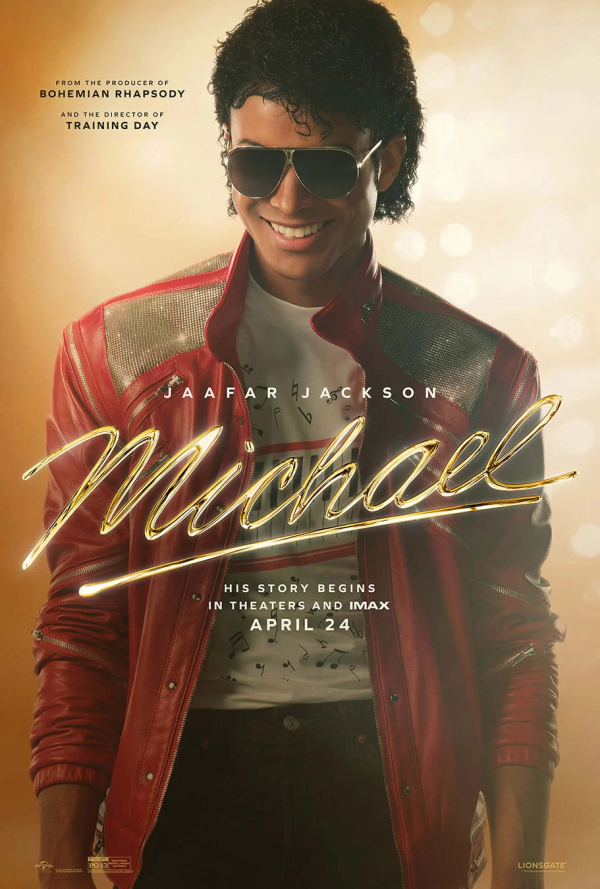
Shortly after the biographical drama Michael arrived in theaters, audiences were already split. Before even buying a ticket, moviegoers may notice a sharp divide in the reviews: a low 39% rating from critics on Rotten Tomatoes, sitting right next to a massive 97% verified audience score. After watching the film, it is quite clear to see why the reviews are polarized.
At its heart, Michael tells a strong, engaging story. The plot follows Michael JACKSON’s difficult path to independence and creative freedom, chronicling his early days enduring grueling, abusive rehearsals in the Jackson 5 to his record-breaking rise as a solo superstar. The movie focuses heavily on his desperate bid to break away from the oppressive control of his father and manager, Joe JACKSON, a struggle that culminates in Michael Jackson formally firing his father by fax in 1981. It also touches upon pivotal career milestones, such as breaking MTV’s racial barriers and the tragic Pepsi commercial fire that resulted in severe burns. Watching him find his own voice and take charge of his own career gives the movie a strong emotional anchor, and the presence of Joe Jackson gives what might have otherwise been a relatively boring sequence of events an antagonist and a major sense of tension.
The audiovisual aspect of this film is incredibly alive, with each number serving as an amazing rendition of not just his greatest solo hits, but also the classic, energetic tracks from his youth. The choreography and special effects are visually stunning, capturing the electric stage presence that defined Michael Jackson. Most notably, Jaafar JACKSON—the late pop star’s nephew—gives an immaculate portrayal. He masters his uncle’s iconic choreography, and the uncanny vocal mannerisms only strengthen the illusion. The sincerity and authenticity bring Michael Jackson’s presence to life in a way that no other actor in the world could hope to capture.
However, this familial casting also points to the film’s most glaring limitation. Produced with heavy influence and oversight from the estate of Michael Jackson, the narrative is noticeably oriented toward the glorification of his memory. While it is natural to celebrate its subject, the estate’s heavy-handed involvement might have prevented an accurate, objective representation of a complex figure, even considering that it was condensed to a two-hour film.
But perhaps the movie is not about an accurate portrayal. In fact, major influential aspects of Michael Jackson were misrepresented or downright not used, yet there is an undeniable beauty to the film that makes it universally entertaining. It may be true that the film lacks slightly in thoughtful writing, but it ultimately functions far more as a dedicated love letter to his devoted fans than a rigorous documentary. The storyline conveniently concludes right after the monumental success of the “Bad” tour which is an abrupt ending in what feels like an equally abrupt sequence of his performances, and the storyline takes distinct creative liberties with his historical timeline.
Yet, for the audience driving the glowing approval score, perhaps these omissions simply do not matter. The fans did not buy a ticket for a forensic examination of his life and human flaws; they came to celebrate the undisputed King of Pop. Michael trades complex biographical truth for a spectacular nostalgia trip for the fans, and an impeccable musical drama for those new to his music.