

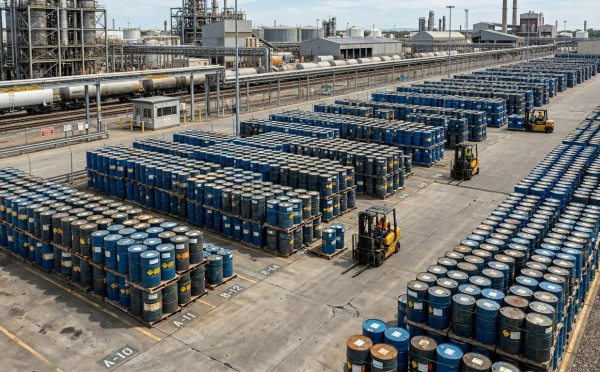
- Supply Chain Crisis: national naphtha price almost doubled due to Middle East Conflict
- Consumer Impact: Shortage of household goods and producer-set limits on purchase introduced
- Resource Security: Officials researching bio-naphtha and alternatives as well as more strategic naphtha allocation
The Invisible Squeeze: How Middle East Tensions are Upending Global Plastics Supply
South Korea’s consumer panic stems from the escalating Middle East conflict. Intensifying tensions involving the U.S., Israel, and Iran have severely disrupted critical maritime routes, notably the Strait of Hormuz. This geopolitical chokehold has restricted the global flow of crude oil and its vital byproducts, triggering an unprecedented “squeeze” on naphtha, the flammable liquid backbone of modern manufacturing.
The global naphtha market is volatile. Prices recently climbed past 141 USD per barrel—nearly double pre-war levels. The surge is driven by disrupted crude oil flows, shifting global refinery capacities, and a high reliance on Middle Eastern exports.
This macroeconomic shift heavily impacts South Korea, which relies on imported naphtha for petrochemical complexes in Ulsan and Yeosu. Historically, 54% to 70% of naphtha imports flowed through the Strait of Hormuz. As this maritime chokepoint faces disruption, petrochemical industry giants must significantly scale back production.
Naphtha, The Mother of Plastics
To comprehend the shortage, one must understand naphtha’s role in modern life.
Naphtha is a hydrocarbon mixture distilled from petroleum or coal tar. Subjected to extreme heat in “cracking centers,” it breaks down into compounds like ethylene, propylene, and benzene. These chemicals are the starting materials for virtually all plastics and rubbers, including regulation trash bags, car tires, athletic wear fibers, gasoline fuel, and pharmaceutical ingredients.
Without naphtha, modern society’s physical infrastructure halts. For export-driven South Korea—a nation with virtually no domestic petroleum resources—energy and resource security are inextricably linked to the naphtha supply chain. A disruption is not merely an industrial inconvenience; it is a direct threat to the country’s economic stability.
Is Naphtha Irreplaceable? Chemical Recycling and Bio-Naphtha
While vital for manufacturing, completely replacing naphtha remains a monumental scientific and economic hurdle. Domestic research institutions are accelerating efforts to decouple manufacturing from imported fossil fuels using alternatives like bio-naphtha and chemically recycled feedstocks.
Bio-naphtha, derived from renewable biomass like waste cooking oil, and pyrolysis oil from melted plastic waste, is a promising substitute. However, scaling is difficult. Global bio-naphtha volume is a fraction of the millions of tons of conventional naphtha that South Korea consumes annually. Furthermore, chemical recycling requires immense heat and energy, making the resulting raw materials significantly more expensive than petroleum-based naphtha. Until these technologies achieve massive economies of scale and better energy efficiency, they remain supplements, not complete replacements.
Another emerging pathway leverages combined reforming and Fischer-Tropsch synthesis to produce decarbonized naphtha from methane and carbon dioxide rather than sourcing it from fossil fuels. Utilizing biomass-derived biogas, this technology can achieve net-zero emissions if low-emission sources comprise at least 70% of the feedstock blend, potentially allowing non-fossil-based naphtha to be synthesised.
Hoarding Behaviors and Government Intervention
The industrial bottleneck has quickly trickled down to consumers. Sparking a panic reminiscent of early pandemic hoarding, supermarket supplies of standard volume-based garbage bags are at an all-time low. Consumers have bought out inventories, forcing major retailers to impose strict purchase limits.
To tackle hoarding, the South Korean government implemented emergency measures, including accelerating the quality inspection period by 90% and increasing manufacturing contract unit prices while freezing consumer prices. Officials also announced a sweeping contingency plan: if official regulation bags run short, citizens may temporarily use regular, unapproved plastic bags to prevent trash accumulation in residential areas.
Future Outlooks
Looking ahead, supply conditions may gradually stabilize but remain fragile. Sporadic tanker arrivals and diplomatic efforts are easing immediate shortages, while prioritized allocation is restoring key production lines. However, sanctions, transport risks, and persistent demand imbalances suggest continued volatility, requiring sustained government coordination and cautious consumption. In the end, the crisis underscores a simple reality: in a world of fragile supply chains, even distant conflicts can quietly reshape the essentials of everyday life.
