How do you express gratitude to your loved ones? Do you feel comfortable doing it? Even when you know how much they mean to you and how much you care about them, it is not always easy to share such emotions. Perhaps this is what the “family month” is about: it offers us an opportunity to spend time with your close family and friends and to share your gratitude. It gives you an excuse to visit and catch up with people that you care about but do not get to see often.
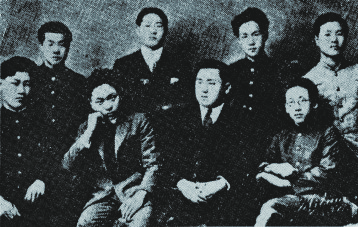
As its name suggests, the “family month” is full of such celebrations. Starting with Children’s Day on the fifth, the celebration continues with Parents’ Day on the eighth, Teachers’ Day on the fifteenth, and Coming of Age Day on the eighteenth. Each of these days, while regarded as a continued sequence of celebrations, has a distinct history and culture from one another. Children’s Day, for example, was declared in 1923, in order to elevate and protect the rights of children. BANG Jeong-hwan, a respected author of books for children, founded an organization to protect children’s rights and support literature for children under the name Saekdonghoe, which later led to the declaration of Children’s Day. The respect for children as individual human beings was greatly emphasized with the slogan “Children, be brave and truthful. Always love and help each other.” While Children’s Day started its celebration on May 1, it was later moved to the fifth as it overlapped with Labor Day.
Children’s Day is therefore celebrated with the focus on forming warm and happy memories for children. A lot of families spend time and bond with their kids; they go out on a picnic or visit places like amusement parks on this day. The other days focus on showing gratitude, including Parents’ Day and Teacher’s Day, and it is more customary to give carnations to loved ones, as carnations symbolize gratitude and love in floriography.
How did May become a month that represents family? While many documents explain that the declaration of the International Day of Families by the UN was the major contributor to such celebrations, such celebrations are likely to have taken place even before the declaration. While the UN declared May 15 as the International Day of Families in 1993, major events of “family month” have been commemorated before then. Parents’ Day, for example, was first celebrated in 1956 as Mother’s Day, and was later officially recognized as Parents’ Day in 1973. Therefore, while the establishment of the International Day of Families may have contributed to classifying such celebrations as “events in the family month,” it is believed that the celebrations of the events themselves started before the establishment.
However, it is fair to say that the celebration of the family month comes with something more than warm and fuzzy memories. With the social expectation of gift-giving, many feel the financial and mental burden of celebrating such events with those who guided them. Some even feel the burden of such family and social obligations, or get overwhelmed about spending time outside with a massive crowd. So the one thing that should really matter is not how big you celebrate such occasions, but spending quality time with your loved ones: it is the essence of the “family month” at the end of the day.