

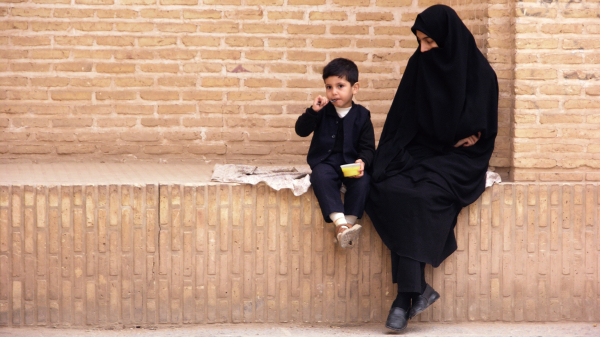
In Iran, the hijab has long been more than a religious custom. Since the 1979 Islamic Revolution, which overthrew the pro-Western Pahlavi monarchy and established an Islamic Republic under Ayatollah Ruhollah KHOMEINI, it has also served as a political norm. The new governing state placed Islamic order at the center of public life, and women’s dress became part of that effort. Over time, the hijab became a required standard in public spaces and a symbol of how the state sought to regulate daily life.
That issue drew renewed global attention after the death of Mahsa AMINI on Sept. 16, 2022. Amini, a 22-year-old Iranian woman of Kurdish origin, died in custody after being detained by the morality police for failing to wear her hijab properly. Her death triggered nationwide protests under the slogan “Woman, Life, Freedom.” The issue quickly expanded beyond dress rules into a broader challenge to state violence, civil liberties and the legitimacy of the government. A United Nations fact-finding body later concluded that her death was unlawful and said it found evidence of torture, arbitrary detention and other abuses during the crackdown on protesters.
Analysts say the protests cannot be explained by hijab rules alone. In a 2022 analysis, IN Nam-sik, a professor at the Korea National Diplomatic Academy, argued that economic hardship, tighter social controls by hard-line conservatives, and frustration over failed hopes for greater openness all played a role. A key part of that background was the sense of possibility that emerged after the 2015 Iran nuclear deal, only to fade soon afterward. Under that agreement, Iran accepted limits on its nuclear activities and international monitoring in return for a path toward sanctions relief. At the time, many Iranians hoped sanctions relief would improve the economy, ease the country’s isolation and open the way for better ties with the outside world, as well as a less restrictive social atmosphere at home. But those expectations faded quickly after the United States withdrew from the deal in 2018 and restored sanctions on Iran. As prospects for economic recovery and openness dimmed, frustration and a sense of deprivation deepened, especially among the urban middle class and younger generations. In that view, Amini’s death became the spark that set off anger that had been building for years.
Since then, more women have been seen in public wearing the hijab loosely or not at all. But that does not mean enforcement has disappeared. Instead, the UN says Iran has increasingly policed women through surveillance, punishment and citizen reporting rather than relying only on visible street enforcement. In practice, public defiance has spread, while state control has continued in different forms.
That tension took on new political meaning after the U.S.-Israeli airstrikes on Iran that began Feb. 28. The strikes were framed around Iran’s nuclear program, missile capabilities and regional influence. But their impact went beyond military targets. Reuters, citing Iranian state media, reported on March 1 that Supreme Leader Ali KHAMENEI had died. Since then, succession and regime stability have become central questions in Iranian politics.
At that point, the hijab issue returned as a visible political symbol. Soon after Khamenei’s death, videos spread on social media and among overseas Iranian communities showing women dancing without hijabs, including clips set to “YMCA,” a song widely used at Trump rallies. Those videos do not necessarily reflect Iranian society as a whole. Still, they suggest that for some Iranians, compulsory hijab remains closely tied to the authority of the state and that the weakening of that authority is now being openly expressed in public and online.
For that reason, the airstrikes and the hijab issue are not entirely separate. Together, they show how a broader crisis of authority in Iran is being reflected in both political upheaval and everyday acts of defiance. In that sense, taking off the hijab in Iran is no longer seen simply as a matter of personal dress. Since Amini’s death, it has increasingly been read as an attempt to reclaim daily life and basic rights from state control. How Iran’s next leaders respond may reveal not only their approach to women’s rights, but also how they plan to govern a society where public obedience can no longer be assumed.
