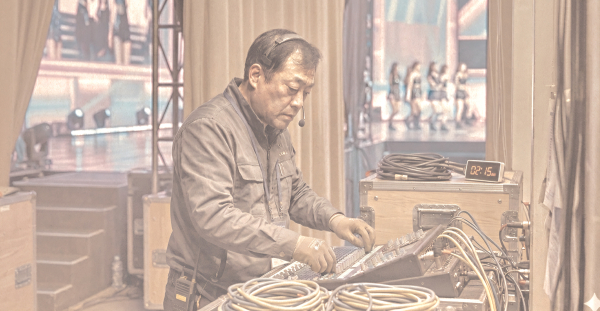
• Extreme Wage Disparity: Staggering pay gap between idols and the technical crews
• Lack of Protection: K-pop staff lack standard contracts, overtime pay, and guaranteed rest windows
• Structural Reform: Industry must move toward collective bargaining and legal labor protections
The global cultural landscape has been undeniably reshaped by the “K-phenomenon.” K-pop idols are now redefining how our society evaluates the very value of labor. However, beneath the neon lights and synchronized choreography lies a sobering reality: a structural imbalance so profound it threatens the very foundation of the Korean wave.
For every performance on a music show, hundreds of individuals—choreographers, stylists, hair and makeup artists, technicians, and managers—work for multiple hours behind the scenes. The disparity in compensation is nothing short of staggering. It is a known, yet rarely discussed, secret within the industry that the performance fee for a single appearance by a top-tier idol can often exceed the combined annual—or even multi-year—salaries of the technical crew supporting them.
The disparity becomes most apparent when viewed against the industry that K-pop most aspires to rival: Hollywood. The International Alliance of Theatrical Stage Employees (IATSE) represents more than 170,000 workers across film, television, and live entertainment in North America. Its agreements mandate minimum hourly rates by job category, strict overtime compensation, and crucially, what the industry calls “turnaround time,” a guaranteed rest window of ten to twelve hours between the end of one shift and the start of the next. If a production runs past that window, financial penalties apply automatically.
South Korea has built nothing comparable. Most entertainment staff work on individual freelance terms or through agencies small enough to fall beneath the threshold at which the full provisions of the Labor Standards Act apply. Businesses with fewer than five employees are exempt from several key protections, including restrictions on unfair dismissal and the obligation to pay overtime premiums. This is not a coincidence. Many styling teams, choreography studios, and production subcontractors operate at exactly this scale—and the incentive to remain below the threshold, rather than grow beyond it, is structurally embedded in the system. Large portions of the idol industry’s workforce exist in a legal grey zone by design, not by oversight. Where IATSE provides workers with collective bargaining power sufficient to face the largest studios in the world, a Korean sound engineer or junior manager faces a major entertainment conglomerate entirely alone, with no institutional counterweight and no floor beneath the terms they are offered.
The ideological mechanism that sustains this system is what labor researchers sometimes call affective compensation—the substitution of emotional meaning for material reward. In the K-pop industry, it manifests as a pervasive narrative in which supporting a beloved artist is framed as its own reward: a calling rather than a job, a contribution to something larger than any individual paycheck. Staff members absorb this framing, often genuinely, because the industry’s social bonds are real and the cultural stakes feel high. To demand better terms can feel like a betrayal of a shared project rather than a reasonable assertion of professional rights.
The structural changes necessary to correct these conditions are neither mysterious nor technically complex. They are politically difficult because they require the industry’s most powerful actors, the large management agencies that set the terms of engagement across the sector, to internalize labor costs they have historically been able to externalize. What is needed is the kind of institutional architecture that Hollywood built through decades of organized pressure: mandatory standard contracts enforced through the the Bureau of Educational and Cultural Affairs and the Ministry of Employment, the abolition of blanket wage arrangements in entertainment contexts where irregular hours are the norm rather than the exception, and the formation of a sector-wide association capable of collective bargaining with major agencies on behalf of the workers who currently face them alone.
K-pop has achieved extraordinary global reach. The industry’s external story is one of improbable, systematic triumph. Its internal story has gone unreported for too long, not because it is hard to find, but because the people living it have been given every reason to believe that telling it would cost them more than it would gain. Changing that calculus is not just a labor issue. It is a question of whether an industry that has successfully exported its culture to the world is prepared to hold itself to the standards it implicitly invites the world to admire.