

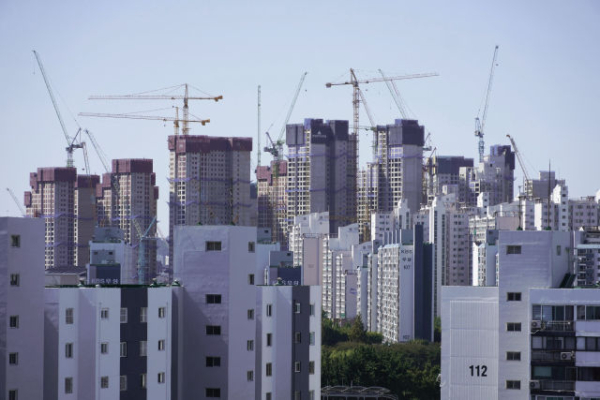
“Buying and selling a home is a personal freedom, but the government determines whether it results in profit or loss.” This statement, posted on X by Korean president LEE Jae-myung on March 1, implies a strong commitment to reforming the real estate market. By utilizing taxes, finance, and regulations, the government aims to make speculation in real estate difficult. Furthermore, the government has been emphasizing the normalization of the real estate market. Key measures include the decision to end the grace period for heavy capital gains taxes for multi-house owners on May 9 and reducing benefits for landlords to cut off unearned income from real estate.
Signs of change are already appearing in the Korean housing market. As the government continues to pressure multi-house owners, the number of apartments for sale in Seoul is increasing. According to real estate platform Asil, as of Feb. 26, the number of apartments for sale in Seoul has increased by 27% compared to the previous month. Apartment listings are increasing, and more transactions are being made at prices hundreds of millions of KRW lower than before. According to data from the Korea Real Estate Board on March 5, apartment prices in Gangnam, Seocho, Songpa, and Yongsan declined for two consecutive weeks. In particular, prices in Gangnam dropped for the first time in about 100 weeks since March 2024. Furthermore, according to data from the Bank of Korea as of Feb. 24, the Consumer Survey Index for Housing Price Outlook (CSI) declined to 108, representing a 16-point drop from the previous month.
While experts predict this downward trend will continue in the short term, the long-term outlook remains uncertain. There is a risk that supply could shrink once the heavy capital gains tax takes effect after May 9. Moreover, experts are concerned that the increased tax burden from real estate regulations will lead to higher monthly rents to cover property taxes, making the rental market unstable.
Attempts to regulate multi-house owners and discourage excessive property ownership to address housing issues can be seen not only in Korea but also around the world. This is because housing is increasingly seen as a vital issue for social stability rather than a simple matter of supply and demand. Singapore is a representative example, known for its strict taxes on multi-house owners. Through the Additional Buyer’s Stamp Duty (ABSD), Singapore imposes a 20% tax on a second home and 30% on a third. Furthermore, higher tax rates apply to properties that are not owner-occupied, encouraging demand for actual residency. With these regulations and a public housing system, more than 90% of Singaporeans now own their homes.
However, strict regulation targeting multi-house owners cannot be a panacea. These regulations are effective when combined with measures to increase housing supply. A clear example of this is the UK in 2024. When the government raised taxes on multi-house owners without implementing supply measures, many landlords withdrew their properties. According to a report from the UK Office for National Statistics in January, private rents across the country have been rising at an annual rate of about 4%. Professor Christian HILBER from the London School of Economics and Political Science noted, “The core of the UK housing crisis is a lack of supply. Punitive taxes on landlords are shrinking the supply chain and acting as a boomerang that drives up rents.”
