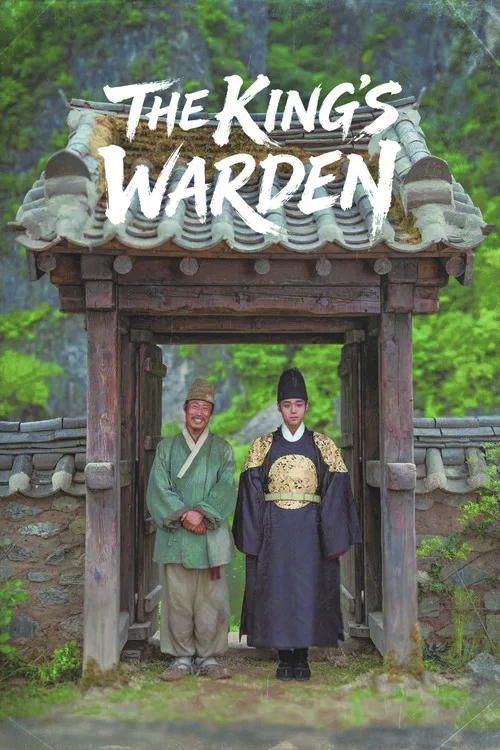
The King’s Warden, a movie based on a historical story from the Joseon dynasty, became a national sensation, stirring the frozen film industry. After its screening on Feb. 4, it has reached a cumulative audience of 10 million for the first time in two years, recorded as the 34th domestic movie to reach such a milestone. It is reported that audiences, who were deeply impressed by the movie, are even visiting historical sites in Yeongwol, the film’s setting.
The movie unfolds the tragic story of Danjong, a young king who was dethroned by his own uncle. In 1453, Grand Prince Suyang, who later became Sejo, executed a coup d’état, where he got rid of his opponents and dethroned his own nephew Danjong, to make himself a king. The movie focuses on the story of Danjong after he was sent into exile in a small town in Yeongwol. While interacting with the townspeople, including a town chief named EOM Heung-do, the shocked and wounded king slowly recovered and became part of the town. Unfortunately, the reinstatement movement for Danjong—led by Prince Geumseong—was caught and failed, and Danjong, who was also involved in the movement, faced the death penalty. Danjong, who did not want to receive the penalty from Sejo’s authority, asked EOM Heung-do to end his life instead, and EOM Heung-do later recovered his body and buried it, despite the authority’s order not to do so.
The story is based on the historical record from the Joseon wangjo silok (Veritable Records of the Joseon Dynasty), which describes how EOM Heung-do recovered Danjong’s body after his death. However, the details, including their interactions and conversations, are not fully recorded by books, and word of mouth from EOM Heung-do’s descendants offer limited description of their stories. Furthermore, how Danjong faced his death is also not consistent throughout records; Sejo silok explains that Danjong strangled himself to death after hearing about the death of Prince Geumseong, while other records describe that a servant volunteered to end his life, after the death penalty was declared. It is widely believed, however, that the record from Sejo silok is not accurate, and that Sejo actually did order to kill Danjong, which he tried to cover up with the record from Sejo silok. In addition, it is interpreted that the servant who ended Danjong’s life was not EOM Heung-do in history, but a distinct figure, who was integrated as a single figure named EOM Heung-do in the movie.
The movie, from word of mouth and positive reviews, has gained popularity among people across different age groups. Viewers were also deeply immersed in the story of Danjong and the surrounding backgrounds. Some analyze that such settings behind the movie was a big contributor to the success of it. ChosunMedia explains that 48% of “ten million movies,” movies that are viewed by more than ten million cumulative audiences, are based on historical events, such as The Admiral: Roaring Currents and Masquerade. Another contributor to the movie’s success is the humane presentation of the tragic story that resonated with audiences, bringing tears and empathy to many and hence leaving lasting impressions. The story of Danjong in a small town is full of warm human connection and invites audiences closer to the characters, which enables viewers to see them in more empathetic, humanitarian ways.