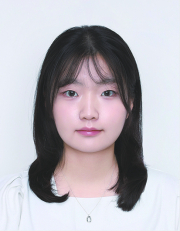
The Postech Times interviewed CHO Isoo (CE 24), whose team has been recognized for the interdisciplinary approach and student-led project execution, and won the First Prize in UGRP 2025.
Could you introduce the research project of your team?
Our project aims to identify the cause of recurring odor problems in Jigok Pond quantitatively. By measuring Dissolved Oxygen (DO), water temperature, and an organic matter indicator using an automated boat-based sensor, we conducted a comparative analysis of the dynamics of water quality deterioration. We theorized that the accumulation of organic material due to increased algal blooms was the main cause of the issue, which was then tested through chlorophyll-a analysis and towing tank test. These methods enabled us to quantify the impact of algae and aquatic plants density on the decrease of DO. We further expanded the issue to the data-based pre-management system by establishing a multiple linear regression-based prediction model.
Could you describe the trials and errors the team experienced?
We initially planned to design a Computational Fluid Dynamics (CFD)-based circulation system and identify the dead zone, with the complete mock-up of pond topography. However, we have realized that designing a large-scale natural water system manually was not realistic due to time and resource limitations. It was also difficult to specify the dead zone clearly, since the depth of Jigok pond was not steep enough. Through this process, we transformed the research focus into qualifying core parameters, such as water temperature, the existence of algal bloom, and the density of aquatic plants, which directly cause a change in DO, instead of a topographical approach.
What did you learn from such trials and errors?
This experience taught me that the most important thing in research is to establish a question that could best fit the problem. I initially believed that good research depends on developing a precise model that highly reflects the actual circumstances and devising a solution for it. While facing this trial-and-error, however, I realized that the core structure of the problem could become vague when I focus on replicating every element. By focusing on the parameters that most directly influence DO dynamics, we were able to see the cause and effect of the problem more clearly and test the theory with better persuasion. I learned that simplification in research is not a compromise imposed by limitations, but a strategic choice that is made to focus on the essence of the problem.
Do you have any future plans in research?
I would like to further conduct advanced research with structure-based protein design in the field of computational biology. I was able to learn the importance of the approach that identifies and structures core parameters, and I would like to further utilize such experience in protein designing research, aiming to design a system that could quantitatively explain how certain physical and chemical elements could affect binding stability and structural transition. I am also interested in continuing to work on interdisciplinary research that connects diverse fields with chemical engineering.
Any advice for Postechians?
I want to share that it is okay even if you do not have a perfect idea ready when starting research. Things sometimes do not go as planned, and you may feel like you are at a dead end, when not being able to see the results. What I think is the most important thing in research is not perfection, but the attitude of finishing the race instead of halting, even when facing difficulties. I hope fellow Postechians, who are willing to start research, will continue their journey at their own pace.