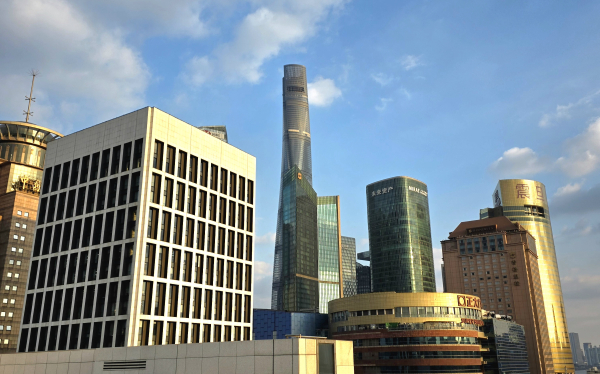
What overwhelmed me upon my first arrival in Shanghai was the speed of the Maglev train. This brief journey from the airport to the city center felt like more than just a commute; it was a potent symbol of China’s technological might. However, this admiration was soon tempered by a subtle sense of unease. The dissonance between the glittering landscape of a futuristic city and its restrictive digital environment left me with a complex perspective on the region.
In recent years, China has demonstrated remarkable achievements in core STEM fields. Its massive datasets, concentrated state investment, and high-velocity research ecosystem are undeniably impressive. Once dismissed as a “land of imitation,” China has moved into a stage where it sets its own technical standards and leads global markets. Yet, this movement toward creation operates on a foundation of control rather than openness.
As a reporter, I experienced this seclusion firsthand. Before leaving Korea, I had planned an on-site interview with a professor. However, just before my departure, the interview was abruptly canceled. No clear reason or official explanation was provided, and the schedule I had meticulously prepared fell apart. From the moment I touched down in Shanghai, the core of my reportage had been hollowed out. I could not give up. In my hotel room, I began messaging students and researchers in related fields via LinkedIn. After numerous conversations and coordination, I managed to secure an interview with a Fudan University student. Thanks to their candid insights, the trip was not a total loss, but the interview with the professor—my original goal—never came to fruition.
It allowed me to viscerally feel how restricted China’s academic spaces are to foreign students and how indirect and uncertain access can be. This experience felt less like a failure of coverage and more like a symbolic representation of China’s academic climate. While academia is fundamentally built on cross-border sharing and cooperation, the current China seems to favor a state-centric “techno-nationalism.” Innovation was powerful, but the process remained closed.
What I witnessed in Shanghai was breathtaking technological advancement, matched only by equally formidable barriers. While the progress was undeniable, I remained skeptical about whether that development is sufficiently connected to the rest of the world. Leaving Shanghai, I carried one question with me: “Can the technology of the future truly reach completion behind a wall?” This question is not just for China; it is a question for all of us as we navigate the relationship between technology and power, and openness and control.