

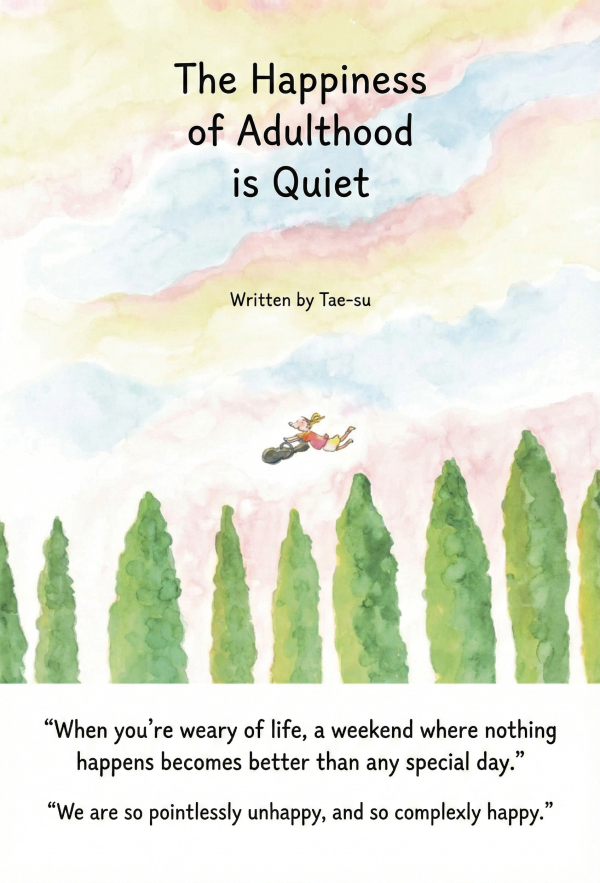
The title of this book is intriguing from the very beginning: The Happiness of Adulthood s quiet. The idea that happiness can be “quiet” is strangely appealing. When we look around, truly happy people are often not those who shine the brightest, but those who quietly take good care of their own lives. I picked up this book hoping to learn how I might become one of them.
Happiness is always personal, and its definition changes from one person to another. For me, it is spending joyful moments with people I care about. However, this book presents a broader perspective on happiness. Rather than treating it as something we must constantly pursue, it reframes happiness as a set of practical skills for reducing unhappiness. In adulthood, life is shaped less by extraordinary joy and more by how well we manage everyday fatigue and anxiety. Instead of highlighting dramatic success stories, the book emphasizes the value of “an ordinary day without trouble” and shows that such days are not accidental, but something we can intentionally create.
The tone of the book is as quiet as its title suggests. It avoids excessive comfort or unrealistic optimism, repeatedly reminding readers that “being okay at this level is enough.” One particularly memorable insight is that our mindset and attitude cannot be sustained by willpower alone. A lack of kindness or patience is often not a flaw in character, but a sign of exhaustion and insufficient recovery. This perspective offers an unexpected sense of relief to those who tend to blame themselves. By changing how we interpret our emotions, our actions can change as well. The book teaches that kindness is not merely a personality trait, but a condition that can be managed through daily habits.
For Postechians, this book may feel especially relevant. In an environment where projects, exams, and assignments overlap, and where constant pressure to “do more” is normalized, we often evaluate ourselves through the language of achievement rather than happiness. This book invites us to pause and step away from that mindset. If happiness does not arrive only as a reward for major accomplishments, and if our emotional stability depends on basic foundations such as sleep, rest, and daily rhythm, then our direction of effort needs reconsideration. Before trying harder, we must learn how to design our lives so that we do not collapse.
After reading this book, the way we talk about happiness begins to change. Instead of asking, “What more do I need to gain to be happy?” we start asking, “What is making my life so noisy right now?” Lowering the volume of anxiety, closing unnecessary comparisons, and restoring a pace that our minds and bodies can endure—these processes are not dramatic, but they are sustainable. Perhaps the happiness of adulthood is quiet not because it is small, but because the way we protect it is quiet.
Finally, the audience I would most strongly recommend this book to is clear: those who have become unusually sensitive, easily shaken by small things, and who often ask themselves, “Why can’t I endure like others?” This book gently reframes that question into: “It is not because you are weak, but because you have been pushing yourself for too long.” While it may not offer grand consolation, it points you toward choices that can make tomorrow a little less exhausting. If you are looking for a quieter kind of happiness, this book could be a good start.
