

While searching for recent news on AI, I came across an article that caught my eye. Titled “Artificial Intelligence tools expand scientists’ impact but contract science’s focus” (Qianyue HAO et al., 2026), the article analyzed the impact AI has made in scientific communities. It explains how the usage of AI tools expands the impact of individual researchers, while potentially hindering the diversity of research findings. As an engineering student in this era of AI, I hear a lot of concerns about how we could survive in this field alongside AI. While getting frequent help from AI with studying, I sometimes even get overwhelmed when it just seems to know “too well” and solves problems so much better than I do. So I would ask myself: “How could I ever be better than AI?”
Then, at other times, I see what we humans have, but AI does not. One issue is accuracy. Say that you want to know how A results in B, but you accidentally ask an AI how A leads to C. If you are lucky, they will correct you that A actually results in B but not C. But at other times, they would provide a forced inaccurate explanation, just to give an “answer” to your questions. It does not even have to be this specific situation. While debating certain topics or questions, I often encountered situations where my friends received completely opposite answers from AI, which would not happen if we had asked a human expert.
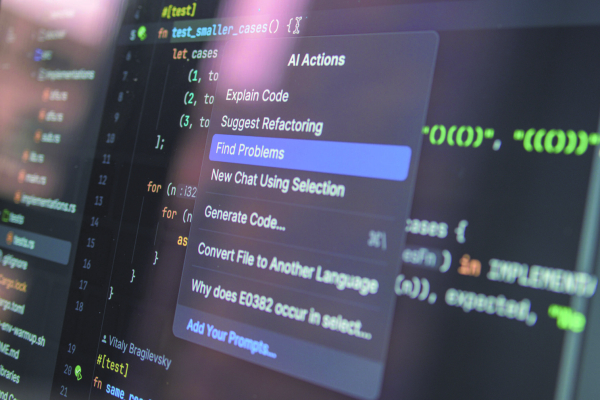
Another issue is how they tend to focus on certain topics or directions, just like the article, HAO et al., pointed out. AI models are trained on preexisting data, so they have a tendency to concentrate on fields that have already been established, instead of pioneering a new field. They also prefer things to be done in specific ways. You may all have experienced a situation where AI keeps altering your code in a way that seems unnecessary, even when you specifically ask them to only debug it.
So if someone asks me, “Do you think AI would replace humans in the engineering field?” I would probably say “No.” AI may help us when doing our jobs in certain ways, but it seems that it will not completely replace us. Our job is to fully leverage it so it can complement us with its strengths. So the question that I think matters more is, how would we be able to work together with AI to make a synergetic effect?
