The Postech Times sought the insights of a professor and a student on a working holiday to explore the merits of staying the course versus stepping away for personal growth.
Is Not Taking a Leave of Absence Also a Credential?

Working every day with POSTECH students, I am often struck by how carefully they think about making the “right” choices. Conversations about leaves of absence come up often, and they are frequently wracked with anxiety. Students think hard over internships, exams, health, motivation, and future plans. Many of these decisions are made with extreme care and enormous deliberation, and for some, temporarily stepping away from campus is genuinely the best choice.
At the same time, I have noticed another feeling beneath these conversations: a quiet worry that not taking a leave might mean missing an important opportunity or falling behind in some invisible competition. It is in this context that I hear the phrase, “not taking a leave of absence is also a credential.” I don’t hear this expression as a claim of superiority. I understand it as self-reassurance–an attempt to say that “staying, too, has its own inherent value”.
In a place like POSTECH, learning is rarely quick or linear. Scientific and engineering knowledge builds slowly, through repetition, revision, and long stretches where things do not quite make sense yet. Staying enrolled allows time for that process to unfold. Ideas connect across semesters, confidence grows gradually, and relationships with classmates and professors deepen in ways that are hard to notice while they are happening. Continuity, in this sense, is not passive. It requires patience and trust in long-term growth.
A big concern is when students assume that feeling stuck or exhausted means they should step away. Difficulty is not a sign that you are doing something wrong–it is a sign that you are doing something difficult. Of course, rest and self-care undeniably matter; but there is also great value in learning how to stay with a problem, and to move forward even when progress feels sporadic. These are skills that matter far beyond university, particularly in research and engineering careers.
None of this is meant to discourage taking a leave of absence when it is truly needed. A leave can be meaningful, even transformative, when it is taken with intention and reflection. What matters most is not whether you step away or stay, but that you think deeply about why you are making that choice. Interruption without reflection is an uncalculated risk.
If I could offer one piece of advice, it would be this: instead of asking questions such as “What will look better to my professors, peers, and potential employers?” ask, “What kind of learning do I need most right now, and where am I most likely to find it?” Sometimes the answer is outside the university. Very often, it is right where you are.
If completing university without interruption can be called a credential, it is not because it looks impressive on a résumé. It is because it reflects commitment, persistence, and the willingness to grow over time. In modern society, which often values constant and rapid change, choosing continuity can be a thoughtful and meaningful decision.
The Art of Stopping: Why I Traded My Calculus Textbook for a Backpack
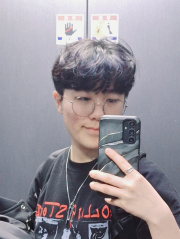
I didn’t realize I was lost until I finally stood still. At 20, I made the unconventional choice to pause my university studies. What followed wasn’t just a break, but the most profound journey of my life.
The catalyst was a solo backpacking trip to Spain. For the first time, I experienced the weight and wonder of total autonomy—where every choice and its consequences were mine alone. I met travelers who lived outside the traditional academic grind, realizing that a degree isn’t the only map to a meaningful life. I chose a working holiday not to escape, but to embody this independence before the “real world” claimed my schedule.
Admittedly, my first semester was a struggle. I was burnt out from years of relentless studying. I loathed my coursework so much that I stopped attending my Calculus lectures entirely after the midterms, relying on a friend to check in for me. I felt like an imposter in a place built for those hungry for knowledge. Beyond the grades, I battled a gnawing loneliness and a paralyzing obsession with how others perceived me. I realized that if I didn’t address these internal fractures, I would eventually break.
While many pursue a Working Holiday for language skills or money, my primary goal is “maturity of thought.” I have replaced my textbooks with literature and open-minded cultural exchange. The fog of social anxiety is lifting, and I am confident that when I return to campus, I will be a far more grounded version of myself.
Of course, there are practical concerns. As a Computer Science major, my parents worry that a year away from such a fast-paced industry might leave me behind. It is a valid fear; my peers are currently sharpening their technical skills while I wander. However, I am no longer afraid. Because I have found my “why,” I know I can make up for the “how” with far greater efficiency.
This journey shifted my focus from GPAs to life philosophy. Stepping off the societal highway allowed me to see diverse routes and reclaim my autonomy. To support a life of travel and freedom, I now realize I must increase my professional value. Ironically, pausing my studies is what finally gave me a clear reason to pursue them.
My goal is now clear: to become a digital nomad. This vision has turned my “hatred” for studying into a “reason” to excel. I plan to return in 2026, engaging in global programs and leveraging my experience to build a career that spans borders.
Life is like traveling. You can choose to travel in a group—safe and predictable—or to travel alone which is demanding but deeply personal. Neither is wrong, but remember: you are the one navigating. I hope you choose the path that leaves you with the fewest regrets when you finally look back.