Although AI has been recognized as a promising technology for a long time, it seems that people truly began to see its potential when ChatGPT was introduced to the public. The emergence of this new model was also frequently discussed by key figures, including CEOs of major corporations, and by the media, and it became a defining model of AI. Since then, generative AI models have been woven into our daily lives. It is now used not only by younger generations and early adopters but also by people from a wider range of ages and groups. It seemed that it would remain to be the predominant model of AI with no setbacks.
In recent years, however, people started to share their concerns with these models. Elon MUSK, for example, showed his concerns with the exhaustion of human-generated data that could be used to train LLM models. The AI bubble theory emerged, with doubts about the future of AI. While some question the future of AI technology as a whole, Jensen HUANG, CEO of Nvidia, has a strong belief in the future of Physical AI. “What’s the next generation of AI? Physical AI,” he said, emphasizing the significance of the field in his speech at CES 2026.
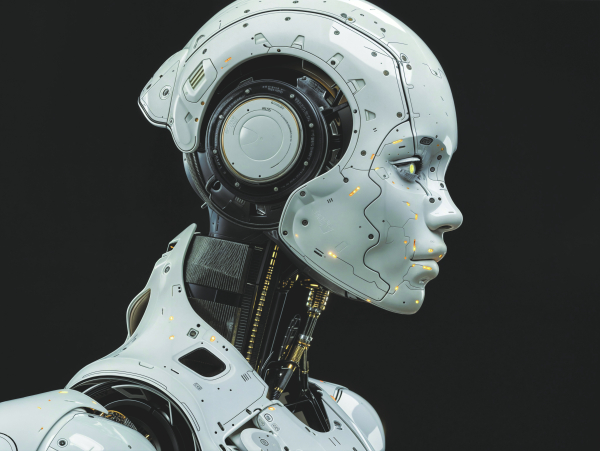
So what exactly is a physical AI? According to Nvidia, physical AI is an AI model that understands the physical properties of the three-dimensional world we live in. Generative AI models are trained by a massive bulk of text and image data from the internet. This enables them to generate results in the form of human languages, visual images, and abstract notions, but they have a limitation in understanding the real world and the principles surrounding it. Physical AI, on the other hand, extends beyond those limitations. It has the ability to convert multimodal inputs such as images, videos, text, and voice into motions that an autonomous machine can execute. A simpler way to describe it is that it is an AI system embedded in physical hardware, such as robots or vehicles.
This technology is important in the development of robotics and AI, since it enables AI to actually execute a certain action in the real world, instead of generating mere texts. With the technology, AIs can now cooperate with, or even replace human movements in the physical space, and are expected to enhance the productivity of many industries such as manufacturing.
The key technology at CES 2026 was inarguably physical AI. Numerous tech companies from the U.S. and China, including Google and Nvidia, competitively presented their physical AI models. Physical AI models developed by China showed its competitiveness in cost and rapid advancements. It is reported that almost 60 percent of humanoid robots displayed at the event were developed by Chinese corporations, whose diverse models from dancing robots to boxing robots drew the attention of the public. In contrast, major IT corporations from the U.S. showed their power in software. Google optimized its multimodal model “Gemini” for a robotic control system, showing its potential to be a standard for an AI robot, and Nvidia showed its technological capacities with its foundation model “GR00T.”
Korea’s humanoid robots were also presented at the event, where “Atlas,” the next-generation humanoid robot of the Hyundai Motor group was unveiled. While it has been pointed out that the domestic physical AI models have weaknesses in technologies for visual perception and execution, due to a long history of focusing on hardware technologies, several models, including Samsung’s Ballie and LG’s Smart Home Agent, showed their potential in the field.
Although expected to assist us at our workplace and home to make our lives more convenient, there are still unresolved concerns surrounding physical AI technologies. After Hyundai revealed its plan to deploy Atlas in its manufacturing process at CES 2026, the labor union at Hyundai has expressed its opposition to deploying humanoid robots in the field. “Not a single robot can be deployed in the field without an agreement with the union,” they stated. This clearly reflects the concerns that AI may bring inequities into the labor market and even replace human labor. As the introduction of physical AI is expected to bring a major shift in the industrial paradigm and its structure, it seems that mutual understanding of the company and the union would be essential in making such changes in the long term.