

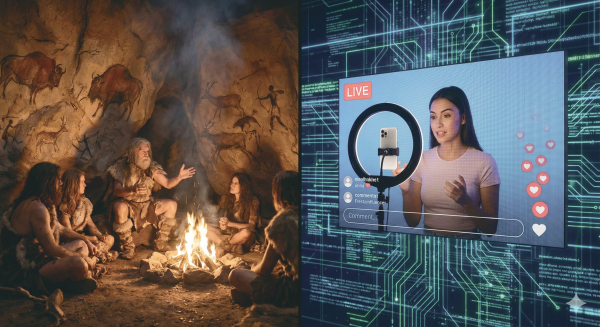
From cave walls to hundred-inch screens, the platform of storytelling is constantly evolving. The tradition of passing down stories from the past, orally shared around a warm and sparkling fire, has graduated to a stage of projection and broadcast, now from the television set and the movie screen. Yet stories are not merely bedtime tales for children. They serve a far greater purpose: shaping how humans understand the world and identify themselves.
For early civilizations, the world was full of unknowns. The forces of thunder, seasons, life, and death in nature presented challenges that early civilizations could not comprehend. Stories helped shape these unknowns into a manageable form. Stories, through myths, could explain nature’s power in terms of godly and heroic actions, thereby making unknown forces relatively easier to grasp. Meanwhile, folktales conveyed messages about survival, morality, and social behavior. However, stories functioned beyond explaining forces in nature. They helped to knit civilizations together. The fact that they could share a story or a legend helped create a sense of unity and belonging.
The printing press brought about a massive paradigm shift to this collective experience. Stories were no longer confined to the reach of the speaker’s voice or even that of the village elder’s memory. Stories were now capable of traversing oceans and eras, standardized and preserved in ink. This stage of storytelling progressed from being communal to personal. The reader could access the thoughts of an author they might never know. With literacy came the ability for the common man not only to read stories but also to tell stories.
However, this pattern persists into the 21st century with a twist. People have transitioned from campfire storytelling to the console. Current media has created a viewing audience that was once passive and is now interactive. Interactive media and video games make their viewers participate in the choices of their actions. Interactive storytelling gives consumers a role to play in determining a result. This can include a video game where consumers make moral or immoral choices to end a game, or a social media algorithm that determines how users view the world around them.
In today’s social media landscape, individuals actively brand themselves through storytelling. On SNS, a person is not just sharing moments but constructing an identity, selecting which experiences to foreground. Posts, captions, and short-form videos function like story fragments, while audience feedback shapes how the narrative evolves. Personal branding relies heavily on storytelling devices such as authenticity, struggle, and growth, allowing individuals to appear relatable while remaining aspirational. At the same time, algorithms influence which stories gain visibility, encouraging users to present a coherent and engaging character version of themselves. In this way, social media transforms self-expression into an ongoing, interactive story where the individual is both author and protagonist.
From whispered myths around a fire to stories projected on massive screens, and now to lives narrated online, storytelling has always reflected how humans understand themselves and the world around them. While the medium has changed, the core purpose remains the same: to create meaning, connection, and identity. The stage keeps shifting, but the human impulse to tell stories endures.
