

The world is changing rapidly, with new technologies emerging and evolving across diverse fields. These technologies not only make certain aspects of human lives more convenient, but also turn human lives upside down. One significant example is the emergence of the Internet. The Internet broke down the physical limitations and barriers of communication, and together with other Information and Communication technologies, it transformed the paradigm of human lives.
While such technologies do make our lives more convenient in multiple ways, there are some unresolved concerns surrounding them. Wide use of social media may lead to mental issues that many—especially teenagers—suffer from, and overuse of AI may cause various social problems. Therefore, it is widely said that recognizing and understanding such issues, while learning how to use these technologies appropriately, is the key to gaining one’s competency in the modern information society. So how do you develop such skills? “ST: Understanding Information Society (CONF319C),” by Professor BAE Young, is the course that will get you prepared.
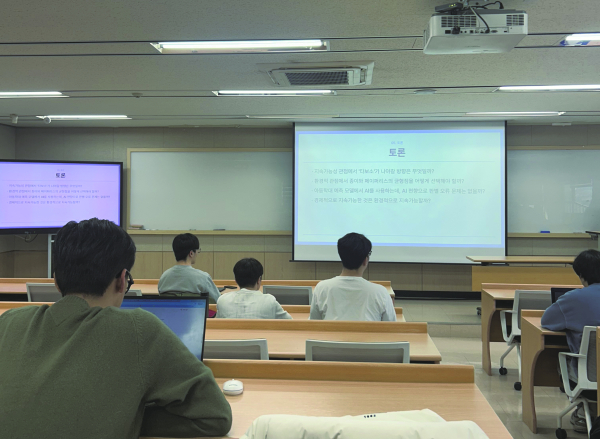
The course, as its name suggests, focuses on understanding information society and the social issues it may entail. In class, each topic is introduced by speakers designated for the day, and open discussions surrounding it follow each presentation. During every class, presentations on a pre-given reading material or case studies are shared. Students can choose to be an individual speaker for the reading material or to give a case study presentation in a group. Those who choose the former option also have to participate in a debate as a designated panel for one of the presentations given by their peers. At the discussion session, the issues are explored in greater depth. Discussions on their impact on society, the extent to which certain measures are required, and more are covered.
With presentations and discussion work assigned to every student, all course participants are able to engage in class actively and share their ideas. The topics covered in class are not limited to the Internet and AI. Different aspects of how Information and Communication technologies shape today’s life, such as digital platform economics, digital literacy, fake news, collective knowledge formed on the Internet, portal sites and their power, and more, are part of these matters. Through discussions on such issues, students can gain insights not only on the topics themselves, but also on social issues on a broader level. For instance, when discussing collective knowledge and fake news, students debated whether majority rule yields the best political outcomes and if an ideal public sphere is truly achievable. Regarding digital inclusivity, questions of whether universal designs should be obligated to the businesses and to which extent society should ensure inclusivity were answered. While the discussions were generally open to any relevant questions, the feedback given by professors provided guidance to make the debate more meaningful.
As engineering students, it is important that we understand the potential problems any technologies may create. Engineering is not merely about science and technology, but it is also about how to make human lives better. “ST: Understanding Information Society” will help you develop a deeper understanding and critical thinking on social issues.
