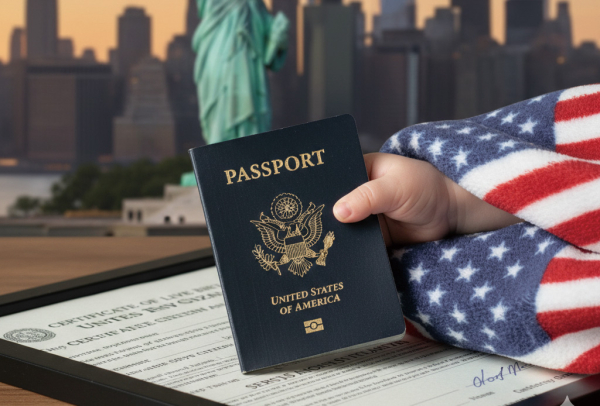
Generated using Google Gemini
A political and legal dispute over birthright citizenship is underway in the United States after a federal executive order sought to restrict citizenship for some children born on U.S. soil. The order immediately faced lawsuits and is expected to continue through the courts, including the U.S. Supreme Court.
The conflict centers on Executive Order 14160, signed Jan. 20 and titled Protecting the Meaning and Value of American Citizenship. The directive aims to narrow who qualifies for birthright citizenship, directly challenging interpretations of the 14th Amendment that have stood for more than a century.
Civil rights groups and multiple states filed lawsuits arguing that the order violates constitutional guarantees. In June, the Supreme Court ruled on the scope of nationwide injunctions that lower courts can impose while litigation proceeds, although the justices did not address whether the order itself is constitutional. As the legal process unfolds, uncertainty continues to fuel political and cultural debate.
At the heart of the dispute lies a fundamental question: How does a nation determine membership? The United States has long followed jus soli, or the right of the soil, granting citizenship based on birthplace. Supporters say this principle embodies inclusive values that shaped the country’s identity as a home for migrants seeking opportunity and belonging.
Opponents of the current policy say unrestricted birthright citizenship may encourage unauthorized immigration and argue that eligibility should reflect stronger ties to national membership. Some suggest a shift toward jus sanguinis, or the right of blood, as practiced in countries such as South Korea and Japan. They contend that such systems better align citizenship with cultural continuity and longstanding identity.
Policy analysts add that this conflict reflects deeper historical narratives surrounding American citizenship. Birthright citizenship, rooted in the 14th Amendment, expanded legal belonging after the Civil War and later accompanied the integration of immigrant communities into U.S. society. In this view, the citizenship functions not only as a legal status but also as a marker of participation in a broader civic culture.
Other countries historically grounded in ancestry-based citizenship are reexamining their models as well. Germany revised its laws in recent decades to improve access for children of immigrant families. South Korea has seen an ongoing debate over multicultural identity as the number of cross-cultural families grows. These global changes suggest that citizenship policies are no longer merely bureaucratic definitions, but a political statements about who nations are willing to include.
The executive order’s uncertain future leaves communities uneasy, while activists and lawmakers brace for a prolonged legal fight. Many expect the Supreme Court to eventually decide the outcome, a ruling that could redefine eligibility for one of the most consequential identities a person can hold.
The struggle over birthright citizenship represents more than a legal conflict. It marks a symbolic moment in which cultural assumptions about nationhood, belonging, and identity are being renegotiated in real time—changes that the world is watching closely.