

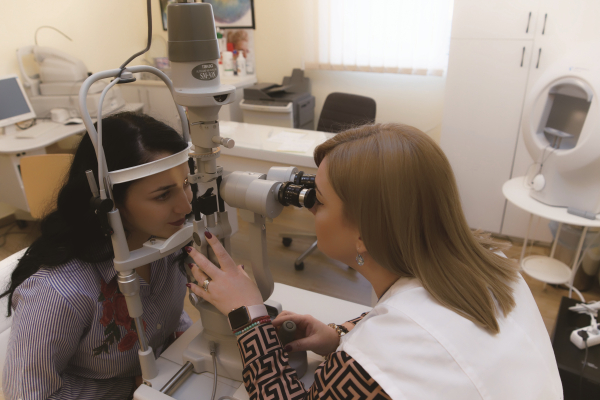
A global “pandemic” of myopia has been accelerating in recent years. Myopia occurs when the eyeball is elongated, causing light to focus in front of the retina instead of on it. As a result, distant objects appear blurry while nearby objects remain clear. According to a paper published in September by Brien Holden, the estimated number of people with myopia worldwide has reached 3 billion, over one-third of the global population. The myopia prevalence among children and adolescents is also on the rise. According to a paper released in the British Journal of Ophthalmology in February, while the global prevalence of myopia among children and adolescents was 24.3% in 1990, it surged to 35.8% in 2023, and is expected to reach approximately 40% by 2050. Korea is no exception to this global “myopia pandemic.” According to the Ministry of Education’s 2024 student health examination statistics, 30.8% of first-year elementary school students, 64.8% of first-year middle school students, and 74.8% of first-year high school students were found to have visual impairment, including myopia.
The causes for the rise in the myopic population are complex. While genetic factors play a role in the development of myopia, experts point to rapid changes in lifestyle and behavior as the main causes of the surge. Specifically, they note that increased exposure to digital screens and a rise in close-up work activities heighten the risk of myopia. An analysis published in JAMA Network Open reported that each additional hour of daily screen time was associated with a 21% higher risk of myopia. Experts also highlight that reduced exposure to natural outdoor light, resulting from increasingly indoor lifestyles, may contribute to the growing prevalence. In fact, a leading hypothesis suggests that retinal dopamine—which is released in bright outdoor environments—inhibits the abnormal elongation of the eyeball, suppressing the progression of myopia. Padmaja Sankaridurg, head of the Myopia Program at the Brien Holden Vision Institute (BHVI), explained, “High population density and close-up work routines in East Asia have led to high rates of myopia and a lack of vision correction.”
Global “myopia pandemic” extends beyond individual health problems, affecting the global economy. According to BHVI, the global productivity loss due to uncorrected myopia was estimated at 244 billion USD in 2015, equivalent to about 0.3% of the global GDP at the time. The myopia pandemic has fueled the growth of a massive industrial ecosystem known as the “vision economy,” from glasses to ocular pharmaceuticals, laser surgery equipment, and AR glasses. According to market research firm Grand View Research, the global eyewear market was valued at about 200 billion USD in 2024 and continues to grow with the rise of related industries such as ophthalmic drugs and devices. Not only traditional optical companies but also big tech companies are joining the vision economy. For instance, Meta has collaborated with a traditional optical firm, EssilorLuxottica, to develop smart glasses, while Google and Apple are also investing in AR eyewear. However, not everyone benefits from this expanding vision economy. Tedros Adhanom Ghebreyesus, Director-General of the World Health Organization (WHO), emphasized that “millions of people around the world are suffering from vision impairment even though simple treatments could restore their sight,” calling for universal access to eye health services.
