Have you ever used polite expressions like “please” and “thank you” when interacting with an AI chatbot? In April, OpenAI CEO Sam Altman commented on X about the electricity costs incurred simply from people using polite language with ChatGPT, stating it was “tens of millions of dollars well spent.” This implies that when millions of people repeat simple greetings to ChatGPT over time, they can contribute to an increase in overall power consumption.
His remark sparked significant public interest in how much electricity AI consumes. According to a study by The Washington Post and the University of California, an AI consumes 0.14 kWh of electricity to write a 100-word email. This is enough energy to power 14 LED bulbs for an hour. Writing one such email every week for a year would consume 7.5 kWh, which is equivalent to the power used by nine households in Washington D.C. for an hour.
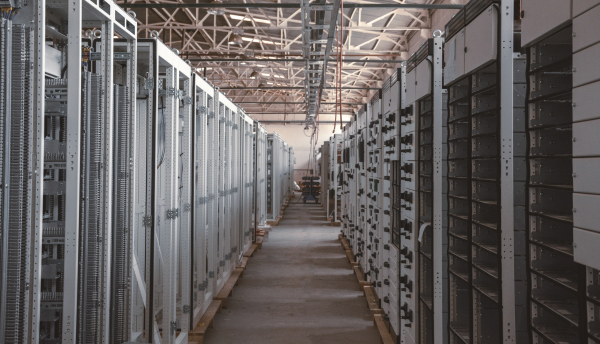
Only a few years ago, AI could barely replace search engines. However, it has now become an essential element in our lives and industries, performing complex tasks such as advanced reasoning and image processing. Along with the rapid advancement of AI technology, intensified competition in the field has given rise to an “electricity-devouring monster”: the AI data center.
AI data centers process massive amounts of data, requiring more computation than simple tasks such as storage and transmission. The data centers supporting these operations run high-performance chips like Graphics Processing Units (GPUs) and Tensor Processing Units (TPUs) 24 hours a day, consuming a massive amount of power. According to the Samil PwC Business Research, a standard Google search consumes only 0.3 Wh of electricity, whereas an AI search based on ChatGPT can use up to 7.5 Wh. Furthermore, training the GPT-3 model requires 1.3 GWh of electricity, which is an immense amount equivalent to the daily power consumption of 100,000 four-person households.
AI is no longer used exclusively by IT companies. It has become a critical tool across major industries, including finance, biotechnology, defense, and manufacturing. Consequently, the demand for data centers that provide the reliable resources required for AI computation is growing exponentially. According to a report from the International Energy Agency (IEA), global annual electricity consumption by data centers will surge from 460 TWh in 2022 to over 1,050 TWh by 2026. Considering that South Korea’s total electricity consumption in 2023 was 557 TWh, it is almost twice the country’s entire power usage.
In Korea, the power capacity required for data centers is expected to reach 7,343 MW by 2027, but the actual available capacity is only 4,718 MW. Power shortages caused by data centers have already become a reality in some countries. Hannah Daly, Professor of Sustainable Energy at University College Cork (UCC) in Ireland, said, “As data centers grow much faster than the electrical grid, some new housing developments in the Dublin area have been restricted.” The situation is also critical in parts of the U.S., including Texas. According to OilPrice, “Texas is preparing to cut off power to data centers during grid emergencies—a sign of just how strained the system has become.”
The Korean government is taking measures to encourage the distribution of data centers to the provinces to resolve power shortages in metropolitan areas. However, opposition from residents, difficulty securing operational staff, and insufficient infrastructure make it challenging. Other countries are exploring different solutions. California and Texas are considering policies such as special rates for large electricity users and incentives for operating data centers outside peak demand hours.
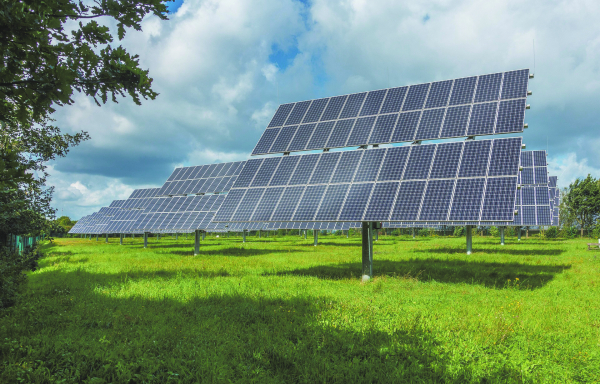
Meanwhile, South Korea’s top tech companies are turning to eco-friendly electricity for data center operations. Naver is building a green data center based on solar power and natural cooling, while SKT and Kakao are designing AI data centers powered by renewable energy. More advanced models exist abroad; for example, some Nordic data centers utilize seawater for cooling and recycle their waste heat into local district heating systems.
Kim Sun-kyo, a researcher at the Korea Institute of Science and Technology Evaluation and Planning (KISTEP), emphasized, “In the era of AI technology hegemony, power infrastructure has become an asset determining industrial competitiveness and national security,” adding, “Korea must strategically approach the multiple challenges, including securing electricity, decarbonization, and developing high-efficiency AI semiconductors.”