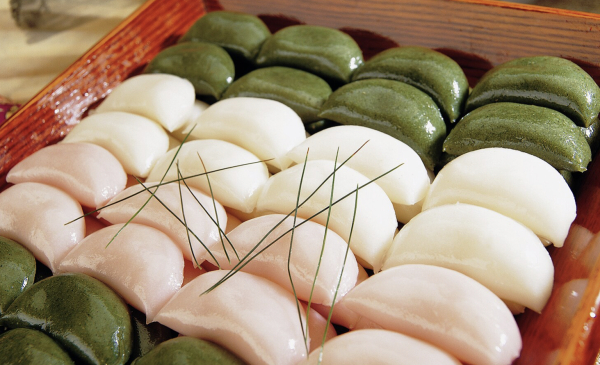
Chuseok, the biggest traditional holiday in South Korea, is just around the corner. Most Korean students will be going home to celebrate with their family, enjoying foods such as songpyeon and hangwa. Likewise, food is an essential part of Korean culture.
Building on this connection between food and tradition, it is worth noting that in Korea, some traditional foods are directly associated with specific days. On Seollal, Korea’s Lunar New Year, tteokguk is a must. Tteokguk, a type of traditional beef-broth soup with rice cakes, thinly sliced eggs, green onion, and meat, is eaten as a symbol of getting a year older. Chuseok’s songpyeon, a half-moon-shaped rice cake, is said to show gratitude for the year’s harvest, and to represent the moon and wishes. On the winter solstice Dongji, red bean porridge, known as pat-juk, is eaten. Negative aura is believed to be strong on this day due to the short hours of sunlight. Therefore, people started to eat red bean porridge, which is believed to have a positive aura that defeats lurking evil spirits.
There are also foods that hold community spirit. Janchi-guksu, literally meaning feast noodles, is noodles eaten on festive occasions. Noodles symbolize longevity in life and marriage, making janchi-guksu a food shared by the community to celebrate special occasions such as weddings and birthday parties.
Community spirit is seen not only in festive foods like janchi-guksu, but also in the collective labor of making kimchi; kimchi is traditionally made through kimjang, a process that requires hours of laborious work. Traditionally, relatives or townspeople would gather, make the spicy paste, salt the cabbages, and rub the paste on each layer of salted cabbage. Although the kimjang tradition has weakened in cities and among the younger generation due to time and labor demands, it still remains such a significant part of Korean culture that UNESCO recognized it as part of the Intangible Cultural Heritage of Humanity.
Foods like songpyeon and kimchi have traditional roots and have been ingrained deeply in Korean culture for centuries. However, nowadays food-related marketing has been on the rise, while traditional meanings related to foods have faded slightly. For example, Nov. 11 is known as Pepero Day. Sharing Peperos, a chocolate-covered stick snack, began at a girls’ school in Busan in the 1990s. Pepero’s manufacturing company, Lotte, quickly caught onto the girls’ trend and began using it as a huge marketing campaign. It was highly successful, and now every Nov. 11, both kids and young adults buy Peperos to share with others.
Another celebrated day is March 3, Samgyeopsal Day. It originated in the early 2000s with the motive of supporting farms that suffered from the pig foot-and-mouth disease by buying more pork, and earned nationwide support, successfully rooting itself in modern Korean culture. It is also called “Sam-Sam day,” as the number three in Korean, “sam,” is the same as the “sam” in samgyeopsal, hence the date March 3.
Food in Korea is more than just something to eat and live on; it extends beyond simply eating and carries traditions and community spirits. Although the traditional symbolism might have softened slightly, the essence of community and sharing still remains, passing down traditions and building new trends.