

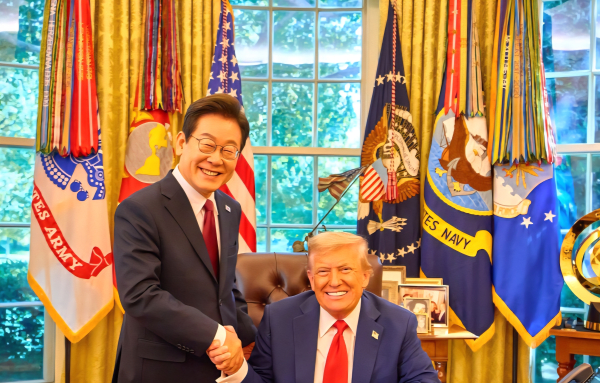
South Korea and the United States have agreed to set mutual tariffs on overall exports to the U.S. and on automobile tariffs at 15% each. Export industries are somewhat relieved to be freed from the previous 25% mutual tariff burden. However, this comes with the cost of a massive 350 billion USD investment fund for the U.S. Additionally, an unequal trade structure has been created in which Korean products, which were previously tariff-free under the Free Trade Agreement (FTA), must now pay a 15% tariff, while American products continue to enjoy tariff-free status.
The negotiation team announced that from April, the overall tariff rate on Korean goods, which previously faced a basic 10% tariff, will increase by 5%p, while the 25% automobile tariff effective from May will be reduced by 10%p. They also stated that upcoming tariffs on semiconductors and pharmaceuticals will be treated no less favorably than those imposed on other countries. Considering food security and the sensitivity of Korean agriculture, it was agreed not to further open the rice and beef markets. However, as a trade-off, the government agreed to support the revival of American manufacturing through a 350 billion USD investment and cooperation fund.
Regarding the agreement, Lee Jae-myung, the president of Korea said, “By aligning U.S. tariffs at levels equal to or lower than those applied to major competitors exporting to the U.S., we have created conditions to compete on equal or superior terms with major countries.”
However, experts point out that while applying tariff rates similar to those of Japan and the European Union is positive, Korea, which was previously a free trade agreement partner with the U.S., has lost a lot compared to the past. Before Trump, U.S. imposed a 10% basic tariff on all countries. In April, Korea and the U.S. applied average tariffs of around 0% to each other, but now Korea must pay 15%, while U.S. products still enjoy tariffs close to 0%. Experts note that compared to other countries, this is about average, but the increase in automobile tariffs from 0% to 15% is a significant blow. Previously, Japanese and EU cars faced a 2.5% tariff, but now it has risen to 15%, eliminating Korea’s tariff advantage. The future direction and impact of this tariff agreement remain to be seen.
Reporter Seo Ji-woo
sjiwee1108@
