Following the enactment of the Special Act on the Management of High-Level Radioactive Waste (HLW) this year, The Postech Times asked two experts for their takes on the system.

Professor Wooyong Um (DANE) and Ph.D. Hyojoo Kim (DANE)
After numerous setbacks over the past 40 years, the selection of a site for the disposal of HLW, which was first discussed domestically in 1986, has finally borne fruit in the form of a special law. The recently enacted Special Act on the Management of High-Level Radioactive Waste is highly significant in that it lays the foundation for a full-cycle management system in which the state takes responsibility for nuclear power generation and the management of HLW.
Referring to cases from Sweden and Finland, Korea’s new law places public acceptance at the core. It introduces a participation-based structure grounded in prior consent by requiring applications from local governments, confirmation of residents’ opinions, and approval from local councils from the early stages of site suitability investigations. In addition, it includes various institutional mechanisms such as deliberative processes, referendums, and support committees for host communities—forming a legal framework similar to that of other countries. However, there are still limitations in ensuring genuine participation, as core participation procedures remain optional—for example, collecting residents’ opinions is only possible “upon request,” and the legal effect of referendum results is not clearly defined.
There is a clear difference between the mere existence of a system and its actual operation. Therefore, the soon-to-be-announced enforcement decrees and regulations must include specific measures to ensure the substance of resident participation, transparency in information disclosure, and procedural fairness in decision-making. Moreover, the current special law must move beyond a short-term compensation focus and instead provide strategies for building long-term trust with local communities.
Finland and Sweden have built the social foundation for policy implementation through long-term trust-building strategies and ongoing communication. In particular, Sweden’s SKB has accumulated trust over several decades through consultations and information-sharing with local residents. In Korea, past efforts to unilaterally designate and proceed with site selection have repeatedly failed due to local opposition. Thus, even if institutional changes are made, true public acceptance will not be easy to achieve if residents still lack trust in the industry.
In the end, true acceptance can only be secured when there is transparency in information, credibility in promises, and above all, procedural fairness that allows local residents to feel their opinions are respected. We have now opened the institutional door to managing radioactive waste. In order for that door to lead to trust and cooperation, we must not be content with superficial similarities but ensure effective institutional design and sincere, long-term communication strategies.
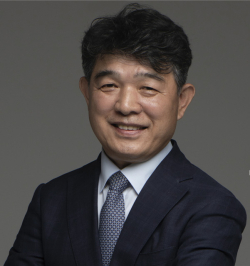
Kyungsu Kim, the president of iKSNF
The most significant achievement of Korea’s recently enacted Special Act on the Management of High-Level Radioactive Waste lies in its codification of a democratic and transparent site selection process. From a professional perspective, if the act is implemented but still fails to result in the designation of a suitable repository site, the foundational intent of the legislation would effectively be undermined. International precedents—particularly from Sweden and Finland—highlight the critical importance of voluntary public participation and the building of mutual trust in the site selection process.
As both domestic and international circumstances improve, the question now becomes: where should Korea concentrate its efforts next? This article outlines five strategic priorities aimed at fostering public confidence, policy coherence, and long-term technical safety.
1. Technological Self-Reliance and the Korean HLW Disposal System
The foremost priority in HLW management is technological self-sufficiency. Korea must develop an integrated management system connecting an on-site storage system, a centralized interim storage system, and a final deep geological disposal system.
2. Geological Stability Must Be the Absolute Criterion
HLW must be isolated from the biosphere for over 100,000 years, a timeframe that far exceeds the lifespan of any human institution or engineering structure. Therefore, long-term safety relies on the natural barrier functions of stable geological formations, not engineered solutions alone.
3. The 500m Underground Research Laboratory (URL) as a Hub for Public Communication
International experts have noted that allowing citizens to experience underground research facilities firsthand is highly effective in increasing public understanding and perception of safety.
4. Partnership-Based Siting: Government–Community Collaboration
To reduce conflict and accelerate the siting process, the HLW Management Commission must establish formal consultation mechanisms with interested communities. Through this structure, the commission should allow sufficient technical flexibility and proactively incorporate local perspectives. For Korea, with three coastlines and limited inland space, coastal siting strategies should be considered.
5. A Strategic Approach to Decoding the 1,000m “Geological Black Box”
Constructing a deep geological repository demands complex deep-subsurface engineering and rigorous safety validation. However, Korea lacks domestic experience in large-scale underground facilities and still lags in site characterization capabilities. It is thus necessary to engage top-tier experts or institutions by specialty and consider technical field-specific contracting to ensure quality and the incorporation of cutting-edge international standards.
Ensuring the safety of high-level radioactive waste over 100,000 years is not merely a technical endeavor—it is a societal pact and a legacy of responsibility that begins with the decisions we make today.