On June 1, a thunderous explosion ripped through the Ivanovo Severny Air Base in western Russia, about 1,000 kilometers away from Ukraine’s capital, Kyiv. The Russian air defense was powerless against the sudden strike, leaving 41 fighter jets completely destroyed.
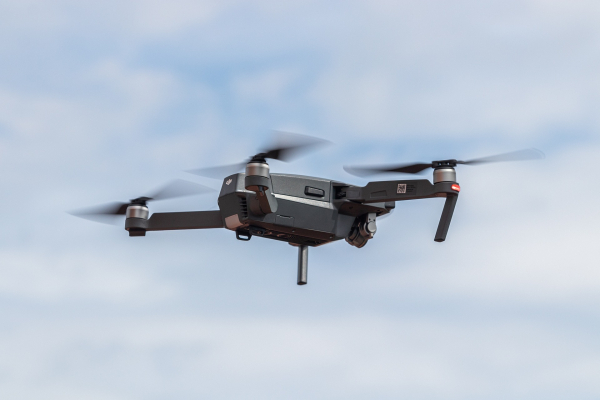
The weapon of destruction behind the scenes was “Osa,” a suicide bomber drone weighing only about 5kg. Ukrainian forces concealed 117 of these drones inside cargo trucks headed for Russia, remotely launching them into the air when the trucks passed near the air base. After the strike, a whole fleet of Russian aircraft had been destroyed, while Ukraine’s losses amounted to just the expendable drones, consumed like bullets. This operation and many others from the 2023 Israel-Palestine war and the 2025 Israel-Iran war underscore the new face of modern warfare utilizing drones.
Drones, small aircraft guided remotely by operators, have long been utilized for military purposes. Their history stretches back to World War I, when early prototypes were built for reconnaissance. After World War II and the Cold War, drones became increasingly sophisticated and evolved into vital intelligence-gathering tools, with advances in remote sensing, satellite guidance, and miniaturized technology. The turning point came during the 2010s, when the U.S. started to arm drones with missiles for targeted killings of terrorists. Thus began the era of drone combat.
The ongoing war between Russia and Ukraine has further transformed the role of drones. They are no longer limited to surgical strikes but are now deployed as mass-destruction weapons. Compared to fighter jets and tanks, drones are cheap to produce, pose no risk to pilots, and can be controlled from long distances. In June, Volodymyr Zelenskyy, the president of Ukraine, revealed the staggering scale of the conflict, revealing that Russia has launched a total of 28,743 “Shahed” suicide drones against Ukraine since the beginning of the war. Their affordability and expendability have made them indispensable, turning drone combat into the new paradigm of modern warfare.
The changing phases of war is shown not only in weaponry but also in soldiers as well. In November 2024, The Wall Street Journal spotlighted one of Ukraine’s war heroes: Oleksandr Dakhno, a 29-year-old drone pilot who killed more than 300 Russian soldiers in just a year and a half. Remarkably, Dakhno had no prior military experience; as a boy, he had spent countless hours immersed in video games. Yet on the battlefield, such drone pilots who might once have been considered physically ill-suited for war are now becoming the deadliest soldiers on the frontlines. In the near future, it would not be surprising to see more soldiers with controllers instead of rifles.
The rise of drone warfare has altered more than just the outward appearance of battle. It is reshaping the mindset of the soldier, the way nations perceive conflict, and even the meaning of humanity in war. In traditional combat, every soldier instinctively understood that attacking an enemy was inescapably tied to risking their own lives. Drones, however, break this symmetry: they allow one side to engage at a distance, without exposing its own operators to the risk of injury or death. Unlike the soldier who pulls a trigger in close quarters, the drone pilot engages remotely and indirectly, thus naturally dehumanizing their target on screen. Modern warfare no longer resembles a battle, but a cold hunt for human lives.
The rise of drone combat is just the beginning of unmanned warfare. Autonomous, AI-driven weapons are quickly emerging to soon stand at the center of future military forces. Then, even the last human act of a drone pilot pulling the trigger may be fully automated. While it is imperative to prevent the tragedy of war itself, human control and agency over the use of automated force is one last principle that cannot be abandoned. Science and technology are just tools—nothing more—used to resolve the conflicts and problems that remain deeply human, and we must not neglect the moral weight they carry.
The advance of autonomous technologies is unstoppable, but it must be accompanied by ethical judgment and responsibility. No matter how efficient drones become or how many lives they save, caution must prevail. Advanced unmanned systems are a double-edged sword that will strike back if we remain passive. Even as human roles are diminishing in this technological wave, our duty is to ensure that humanity does not vanish with it.