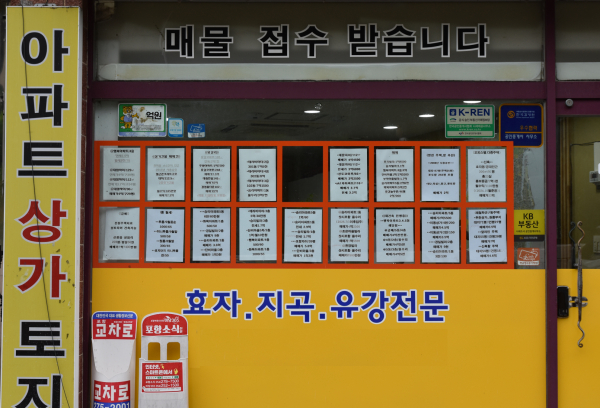
Around the world, housing cultures often reflect the lives and social norms of different societies, offering insight into various cultural aspects. In South Korea, one such example is the unique real estate policy called “jeonse.”
The concept of jeonse is so ingrained in daily lives of Koreans that it is even used for humor. For example, when someone occupies a seat for a long time, one may say, “Did you pay for jeonse here?” It is also depicted in media, most notably in the series Squid Game, where one of the characters participating in the deadly games was set to be the victim of a fraudulent jeonse contract. Today, the jeonse system is deeply embedded in modern Korean culture, offering advantages but causing serious social problems as well.
In simplest terms, jeonse can be understood as a “long-term rental deposit.” More specifically, the tenant initially provides the landlord with a large lump-sum deposit. Then the tenant occupies the property for the agreed term without paying monthly rent, and receives the full deposit back upon leaving. For landlords, the arrangement is advantageous because it provides immediate access to substantial capital, which they increment through other financial activities such as investments.
Tenants benefit from saving on monthly expenses, though they must prepare a large deposit at once, usually through jeonse loans. Compared to rents, jeonse shifts the cost to the loan interest and the opportunity cost of the deposit. Still, the system remains attractive to many, thus sustaining a significant jeonse supply and demand within the Korean real estate market.
Jeonse is especially popular for young people, because it is considered a central stage in the progression from monthly rent to eventual home ownership. In Korea, about one-fifth of the population is concentrated in the region near Seoul, where housing prices rank among the highest in the world and the gap between monthly rents and real estate prices is extremely wide. Jeonse serves as the bridge between the two. A common path for Koreans is to begin with a monthly rental while saving, then move into a jeonse property, and ultimately use the accumulated assets during years of financial activity to finally acquire a house.
Despite its popularity, jeonse is also the cause of many fraudulent contracts. Jeonse fraud is a serious problem in Korean society, leaving countless young people trapped in financial hardship. One of the most common forms of jeonse fraud is “tin can” jeonse. This occurs when the required deposit is higher than the value of the property itself, meaning that even if the house is sold, the landlord cannot repay the tenant’s initial deposit.
Such cases are often caused by a practice called “gap investment.” The landlord purchases a property whose price and the required jeonse deposit are nearly equivalent, acquiring it by paying only that small difference first, then covering the rest with the tenant’s deposit. The landlord then aims to resell the property at a higher price. However, if the property value declines instead, resulting in tin can jeonse, the landlord may face bankruptcy, leaving tenants unable to recover their deposit.
Ultimately, jeonse remains a unique Korean housing practice that reflects the nation’s cultural and economic landscape. Yet as the system faces rising risks and frequent cases of fraud, it has become clear that institutional reforms are needed to protect tenants and ensure stability in the market.