

What troubles you? In modern society, we all face our own unique problems, ranging from the scrutiny of others to worries and anxieties about the future. While the quality of life has improved incomparably in terms of material comfort, the number of people suffering from stress-related illnesses, anxiety disorders, and depression has surged. This is because the crises we now face are no longer primarily material, but existential and psychological. Nowadays, we are exposed to an endless flood of information to see and to know. Open Instagram, and you will encounter people with better jobs, glossier and stronger cars, and larger, more beautiful homes. When we compare ourselves to them, lying in a small room just scrolling, we easily feel like losers and fall into unease, fear, and guilt.
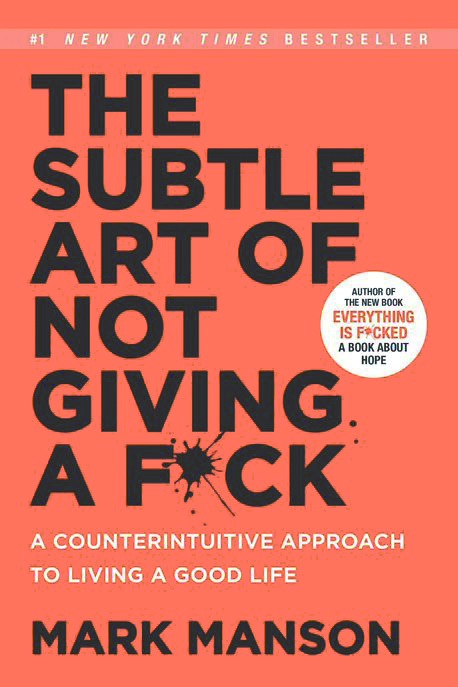
Many people tend to focus more on their weaknesses than their strengths, on what they lack rather than what they excel at. With a positive mindset, they try to become happier, healthier, faster, smarter, richer, more popular, and more productive. But the more they strive for this, the more they end up digging into their flaws and failures, becoming obsessed with them. The philosopher Alan Wilson Watts described this as the “backward law”—the desire for a more positive experience is a negative experience, and paradoxically, accepting a negative experience is a positive experience. Another philosopher, Albert Camus, said, “You will never be happy if you continue to search for what happiness consists of. You will never be happy if you are looking for the meaning of life.” The “subtle art of not caring” introduced in this book follows a similar path. It suggests that we should simply say “NO” to everything that does not matter in life and focus only on what truly does.
For example, many people struggle with uncertainty about what they want to do with their lives. In other words, they do not realize what is important, and cannot give up on anything. In such a situation, the author recommends thinking oppositely. While conventional approaches focus on finding out what you want, he suggests focusing on what kind of pain you are able to endure. The author shares an anecdote of once dreaming of becoming a rock star when he was young. However, he eventually had to give up, because he could not stand the tedious everyday practice, nor the heavy equipment he had to carry around. Imagining himself on stage, with the crowd cheering for him, thrilled him, but the process required to reach that point was not something he could endure. The author shows that true life change begins with enduring the countless pains, not just chasing the sweetness of dreams.
The other piece of advice the author gives in this book is also worth reading. These include clearly distinguishing between values to keep at a distance and values to care about, not being afraid of being wrong, and rejecting countless options to focus only on the most important things. That is to say, the book provides concrete tips for keeping only what truly matters in your life’s list and letting go of the rest. It shows that working harder and caring more are not necessary for a better life. On the contrary, the key insight of the book is that excessive effort and worry can take you further away from happiness. Why don’t you learn “not giving a f**k” to realize that you do not need to expend energy and effort on what others tell you, and find genuine freedom in your life?
