

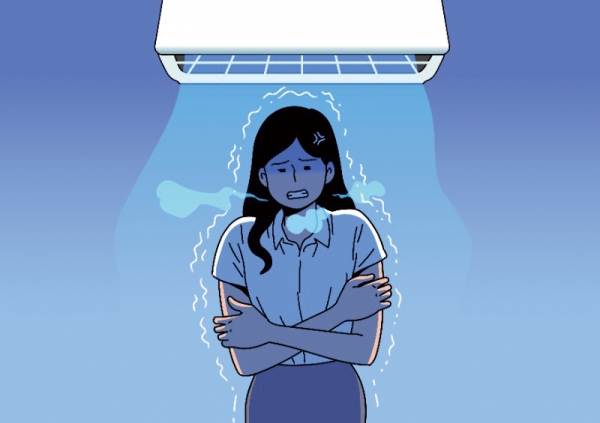
On a sweltering summer day, air conditioning can be a lifesaver. Upon entering an air-conditioned room, the cool breeze that greets you offers an incomparable sense of relief. As global temperatures rise and heatwaves become more frequent, air conditioning seems indispensable. However, the misuse of air conditioning can lead to adverse health effects.
While air conditioning is not inherently harmful, it can lower humidity levels, potentially leading to symptoms that make one feel unwell. Low humidity dries out the nasal passages and throat, which can cause discomfort, and irritation, and even increase the risk of respiratory infections. Common symptoms associated with this dryness include a runny nose, sore throat, and coughing, symptoms that closely resemble those of the flu.
Moreover, sudden and significant temperature differences between the indoors and outdoors can make individuals more susceptible to illness. When the temperature difference exceeds five to six degrees Celsius, the body may struggle to adapt quickly to the changing environment. This can result in headaches, chills, and other discomforts. If these symptoms worsen, they can negatively impact work performance. Therefore, it is crucial to avoid setting the air conditioning to excessively low temperatures for extended periods.
Given these considerations, it may not be ideal to sleep with the air conditioning on. Sleeping under these conditions means prolonged exposure to low humidity and cool air. Moreover, controlling the temperature and airflow of the unit is challenging while asleep. As a result, one can easily wake up with a sore throat and runny nose, becoming more susceptible to colds and respiratory diseases.
Another critical factor is the potential for bacteria and viruses to thrive in air conditioning systems. These pathogens can grow in water tanks and spread through the air conditioning unit, especially in closed environments, where air circulation is limited. This lack of ventilation can lead to a higher risk of infection. For instance, COVID-19 cases have often peaked during the hottest months when people predominantly stayed indoors with air conditioning running. According to the Korea Disease Control and Prevention Agency (KDCA), hospitalized COVID-19 patients increased approximately fivefold from the first week of July to the last week, underscoring the need for proper ventilation. To minimize the risk of virus transmission, experts recommend opening windows for ventilation every two hours.
In addition to ensuring proper ventilation, cleaning air conditioning filters regularly can enhance the safety and effectiveness of these units. Filters can harbor not only bacteria and viruses but also mold, dust, and other allergens, all of which can irritate the respiratory system and exacerbate pre-existing conditions. When cleaning filters is difficult, air purifiers can be a valuable alternative for maintaining better air quality.
While air conditioning can provide significant comfort during hot days, it is essential to be mindful of its potential health risks. By taking precautions such as avoiding overuse, regular ventilation, maintaining clean filters, and using air purifiers, individuals can enjoy the benefits of air conditioning while safeguarding their health.
